Sourcing smartwatches from China means choosing a supplier who can prove the specs you will print on your listing: display type, water rating, battery life under real use, and an app that pairs and stays connected. This guide walks through the checks, with models from the HnThai catalog, so you can order with a test plan instead of a guess.
Before You Read: This guide is written for importers, distributors, and e-commerce sellers who buy smartwatches in bulk from China. It covers how to read a spec sheet, which claims to test on samples, and how to match models to your buyers. If you already know which models you want, skip to the model list near the end.
What Smartwatch Sourcing from China Involves
A smartwatch order is not one product decision. It is a chain of them: the display, the water rating, the battery, the chip, the companion app, the strap, the charger, and the packaging. Each link can produce a return on its own, and the supplier's spec sheet will not warn you about most of them.
China's smartwatch supply sits in Shenzhen's Huaqiangbei electronics market, where hundreds of factories sell through traders and agents. The same model name can hide different chips, different screens, and different firmware depending on which factory built the batch. Two watches that look the same in a photo can behave differently on a buyer's wrist. That is why sourcing smartwatches is mostly a verification job: the order is won or lost before the bulk shipment, in the sample stage.
The work breaks into four steps: match the model to your buyer, read the spec sheet against what your buyers will actually do with the watch, test three samples the way a buyer will use them for a full week, and get the answers that matter in writing — in the purchase order, not in a chat message.
This guide follows that order: pain points first, then the five specs that decide returns, then models matched to three buyer types, then the questions to put to a supplier.
Why Smartwatches Get Returned: Five Pain Points Buyers Meet First
Returns rarely come from one dramatic defect. They come from the gap between what the listing promised and what the buyer found on day three. Five gaps cause most of them.
1. Battery life that shrinks in real use. The quoted figure is measured in a lab with Bluetooth barely used, brightness at minimum, no always-on display, no GPS, and no calls. A real buyer switches all of those on. A November 2026 review analysis of a fitness tracker sold on Amazon found the maker quoted 60 days while a buyer measured about 20 days in normal use. In Australia, a 2025 tribunal case heard the same story: a Galaxy Watch 6 advertised at up to 40 hours lasted 6.5 to 10.5 hours in daily use. Your customers will not file tribunal cases. They will return the watch. We covered how to test battery claims on samples in our battery life guide.
2. Water resistance that does not cover swimming. A watch rated IP68 handles rain and handwashing. It is not a swimming rating, and most makers who print only IP68 do not recommend swimming with the watch. The buyer who swims with it, then finds water inside, returns it as faulty. The fix is to buy the rating your customers' real use needs — 5ATM for swimmers — and to print exactly what the rating covers. See our IP68 vs 5ATM guide.
3. An app that will not pair, or will not stay paired. Most smartwatch returns start with the app, not the watch. Pairing through the phone's Bluetooth settings instead of inside the companion app leaves a half-connection the app cannot take over. Android battery optimization can cut the link hours after pairing. An app that needs Android 9 or iOS 12 will not set up on an older phone. A buyer who cannot connect the watch will not keep it long enough to judge anything else. See our companion app guide.
4. Charging that fails overnight. Most budget watches charge through two small gold contacts and a magnetic cable with spring-loaded pogo pins. Sweat, dust, a weak magnet, or a worn pin breaks the contact, and the watch simply does not charge. The buyer plugs the watch in at night and wakes up to a dead watch — and blames the watch, over a cable that costs a fraction of it. See our charging guide.
5. NFC that cannot pay. The spec sheet says NFC. The buyer holds the watch to a payment terminal, and nothing happens. Tap-to-pay needs a certified wallet, a bank that supports it in the buyer's country, and a screen lock, and most budget watches run a proprietary system that cannot install Google Wallet at all. Their NFC means door unlock, not payments, and the listing has to say so. See our NFC guide.
Every one of these gaps is avoidable. Each has a test you can run on three samples in a week, and each has a question you can put to the supplier in writing before you order. The rest of this guide gives you both.
Display: AMOLED vs TFT
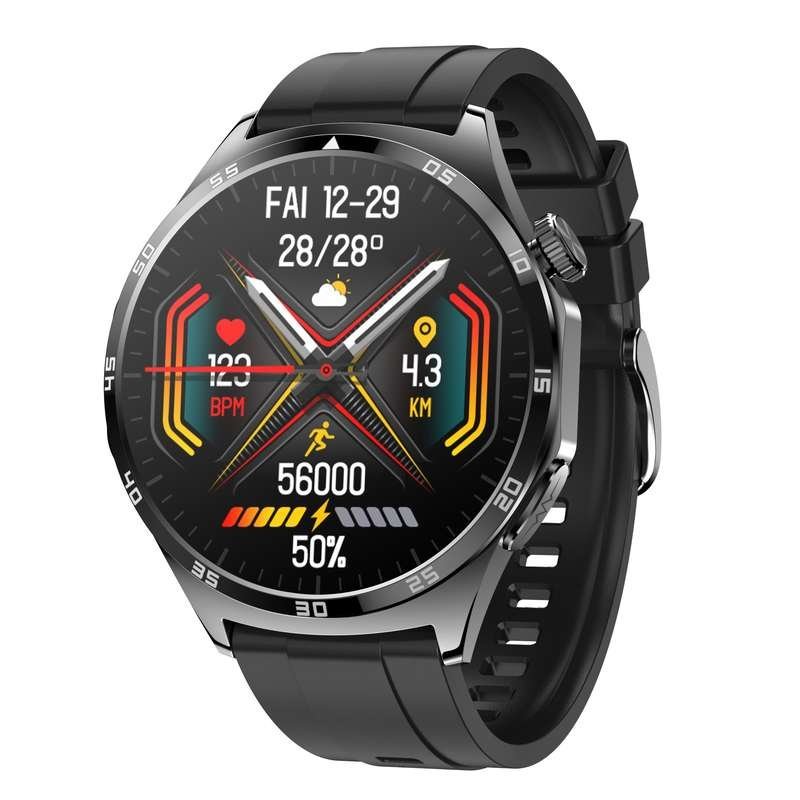
The display is the first thing your customer sees, the biggest driver of the "this feels premium" reaction, and one of the easiest specs to misrepresent. Ask any smartwatch supplier in Huaqiangbei for their best-selling models and the conversation will turn to the screen within a minute.
AMOLED lights each pixel individually. Blacks are truly black, colours are vivid, and the screen stays readable at an angle. It also enables always-on display modes without draining the battery the way a backlit screen would. TFT uses a backlight behind the panel. It is a mature, reliable technology and significantly cheaper — but blacks look grey in the dark, viewing angles are narrower, and colours are flatter.
| AMOLED | TFT | |
|---|---|---|
| Display quality | Vivid colours, true blacks | Adequate, flatter colours |
| Battery impact | Lower for dark watch faces | Higher (backlight always on) |
| Unit cost | Higher | Lower |
| Buyer perception | Premium | Budget / value |
| Outdoor readability | Good | Weaker in bright sunlight |
A practical rule from our AMOLED vs TFT guide: if your retail price is above roughly $30–40, your customers expect AMOLED. Below that, a good TFT panel is acceptable — but only if the rest of the watch does not feel cheap.
Display type is one of the most commonly misstated specs in smartwatch sourcing. A TFT panel can be described as "AMOLED-like" or "HD colour screen" in a listing, and you will not know until the sample arrives. Protect yourself three ways: state the panel type explicitly in the purchase order ("AMOLED" or "TFT LCD", not "HD display"); check the sample in a dark room with a black watch face — on AMOLED the black areas blend into the bezel, on TFT the whole screen glows grey; and ask for the panel model number, since serious suppliers can name the panel maker.
Resolution matters less than panel type — a 1.43-inch 466×466 AMOLED impresses more than a larger TFT with higher pixel counts. Confirm the actual resolution against the sample: some listings quote the resolution of a different model in the same series.
The glass over the display is a separate decision. Sapphire sits at 9 on the Mohs hardness scale; tempered glass sits at about 6.5. Sand, mostly quartz at around 7, scratches tempered glass easily and barely marks sapphire. But hardness is not toughness: sapphire resists scratches because it is hard, and it cracks because it is brittle, while tempered glass flexes under impact. And not everything sold as sapphire is sapphire — a thin coating over ordinary glass does not behave like a solid crystal. Ask in writing whether the screen is solid sapphire crystal or sapphire-coated glass. Our sapphire vs tempered glass guide covers the full trade-off, including the drop-test difference.
Water Resistance: IP68 vs 5ATM
No mainstream smartwatch is waterproof — every one is water resistant to a tested limit. A rating is a pass mark under specific lab conditions: still or moving water, a set depth and time, fresh water, a brand-new watch. Change any of those and the rating stops applying. Never print "waterproof" on its own. Print the exact rating and what it covers.
IP ratings come from the IEC 60529 standard and cover dust and water in one code. In IP68, the 6 means fully dust-tight and the 8 means protection against continuous immersion. The catch: the depth and the duration are set by the manufacturer, not by the standard. One maker tests at 1.5 metres for 30 minutes, another at 2 metres for an hour, and both print the same "IP68" on the box. IP68 is tested in still, fresh water, with the watch sitting quietly in a tank. It says nothing about the pressure of a swimming stroke, a shower jet, or soapy, salty, or chlorinated water.
ATM ratings come from watchmaking (ISO 22810) and measure pressure, not just immersion. 5ATM means the case can hold up against pressure equal to 50 metres of still water. That sounds like a depth limit, but it is not — nobody should take a 5ATM watch anywhere near 50 metres down. The number is a pressure rating, and the test assumes movement, which is why 5ATM is the practical baseline for swimming.
| Rating | What it tests | Safe for | Not safe for |
|---|---|---|---|
| IP67 | Still water, 1 metre, 30 minutes | Rain, spills, a drop in the sink | Swimming, showers |
| IP68 alone | Still water beyond 1 metre, depth and time set by the maker | Handwashing, rain, brief dunks | Swimming laps, hot showers, diving |
| 3ATM | Static pressure, 30 metres | Rain, splashes | Swimming |
| 5ATM | Sustained pressure, 50 metres | Swimming, showering, surface snorkelling | Diving, high-speed water sports |
| 10ATM | Sustained pressure, 100 metres | Swimming, water sports, snorkelling | Scuba diving |
The practical rule: if your customers will swim, buy 5ATM; if the spec sheet shows IP68 with no ATM figure, treat the watch as splash-safe. Our catalog carries IPX8, 2ATM, 3ATM, and 5ATM models, so the rating is a choice you make per model, not a fixed property of the range.
Four things wear a rating down in real life: heat softens the rubber gaskets, so hot showers and saunas kill a rating fastest; soap, shampoo, and salt get past seals more easily than fresh water; pressing a button underwater opens a path past the seal for a split second; and age and knocks wear any rating down — a dropped watch can crack a seal without visible damage. Most makers also write water damage out of the warranty, even on rated watches.
Verify the rating before you order: ask which standard it was tested to, ask for the test report rather than the label, and run your own sample test — a controlled 30-minute pool swim, then a fresh-water rinse and a check of the screen, buttons, and charging contacts. The full steps are in our IP68 vs 5ATM guide.
Bluetooth Calling: What Decides Call Quality
Bluetooth calling is one of the first features a buyer asks about, and one of the first things they complain about. The hardware cost of adding a speaker and a microphone is small. The cost of getting it wrong is not.
The failure mode is rarely "calls don't work at all." It is calls that work just well enough to annoy: a speaker too quiet to hear on a street, a microphone that picks up the room instead of the voice, a watch that steals audio from headphones or a car kit without asking. One buyer on a Woot forum thread described a cheap watch that pushed every call through "its horrible tiny little speaker" — even with headphones on, even while driving — until the watch became a $14 timepiece that only told the time.
Four things decide whether wrist calls are usable, and none of them shows up as a number on a supplier's spec sheet:
| What to check | What good looks like | What to ask the supplier |
|---|---|---|
| Bluetooth version and chip | Bluetooth 5.0 or higher with BLE; a named chip | Which chip runs the Bluetooth stack? |
| Speaker | Waterproof speaker, sized for voice rather than beeps | Speaker model and size — e.g. the V69 uses a 0916 waterproof speaker |
| Microphone | Anti-interference or noise-reducing mic | Microphone model — e.g. the V69 uses a 4015 waterproof mic |
| Audio routing | Buyer can send sound back to phone or headphones | Does the watch grab all phone audio on pairing, and can the buyer switch it back? |
| Battery during calls | Large battery; talk-time figure, not just standby | What is the talk-time figure? |
The V69 smartwatch is built around calling: a 1.85-inch HD display (360 × 360) under tempered glass and fast magnetic charging to keep up with heavy call use. The V69 pairs a 710mAh battery with Bluetooth 5.0 BLE calling through a waterproof speaker and microphone.
Test calls the way buyers will use them, not in a quiet office: a quiet room at arm's length, a noisy street, with headphones paired, in the car, and ten calls in a row to check for drops. Test with the phone in a pocket, not on the desk next to the watch. The full five-step test is in our Bluetooth calling guide.
Do not promise "crystal-clear calls" for a watch you have not tested. Say what the watch actually does — "answer calls from your wrist with the built-in speaker and microphone" — and say where it works well if you tested it. A buyer who expects a phone replacement will be disappointed; a buyer who expects hands-free answers while driving or working will be happy.
Battery Life: How to Read the Claim
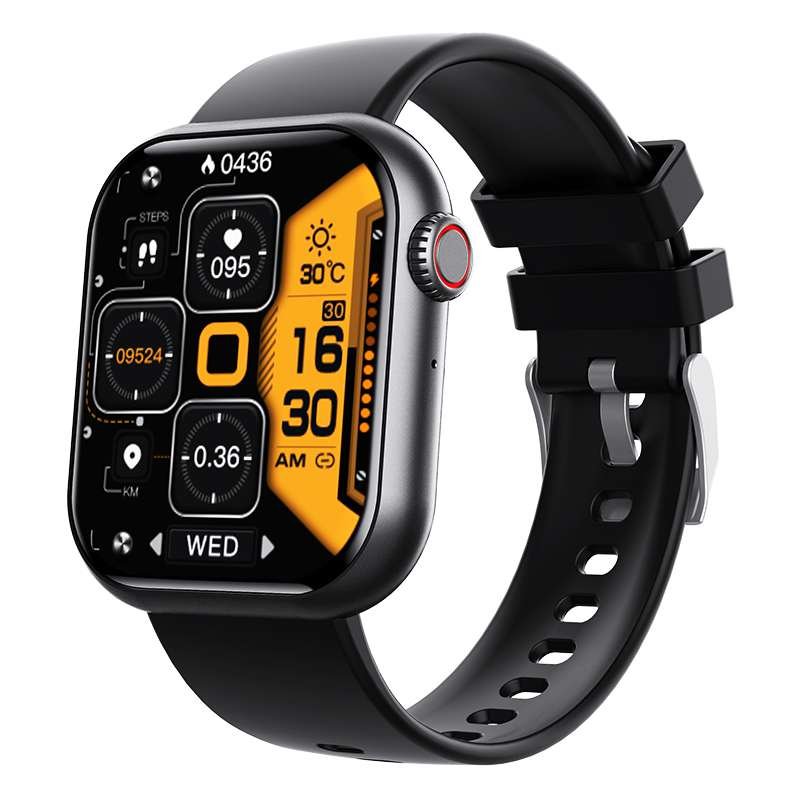
"Days of battery" means nothing without the usage profile. This is the single most useful check you can run on a supplier. Ask what "7 days" means: 7 days of what? A serious supplier answers with split figures — heavy use, light use, and standby — because they know one number hides too much.
The table below shows how models in our own range report battery life. Note the spread: the same watch can be "6 days" or "25 days" depending on what is switched on, and both numbers come from the same spec sheet.
| Model | Battery | Heavy / normal use | Light use | Standby | Full charge |
|---|---|---|---|---|---|
| F57 | 200mAh | 6 days | 10 days | 25 days | About 2 hours, magnetic |
| ET570 | 340mAh | 4–6 days | — | 20+ days | Magnetic |
| ET580 | 380mAh | 3–5 days | — | 20+ days | Magnetic |
| KT77 | 300mAh | About 7 days | — | 15 days | About 2.5 hours, magnetic |
| MT300 | 440mAh | — | — | — | 2-pin magnetic |
| HT38 | 1100mAh | 20 days | — | — | Not stated — confirm in writing before ordering |
| HD300 Pro | 530mAh | 3–5 days | — | 15–20 days | 3 hours, magnetic |
| E500 (band) | 160mAh | About 15 days (about 3 days with everything on) | — | 25 days | Magnetic |
The F57 runs 6 days of heavy use, 10 days of light use and 25 days on standby from a 200mAh battery. That split tells you more than any headline number: you can see the spread between a buyer who tracks workouts and takes calls and a buyer who mostly checks the time. When a supplier can only give you one number and cannot say how it was measured, treat that number as the best case.
What drains the battery fastest is not a mystery. Always-on display is the biggest drain on most watches and can cut battery life by a third or more. An hour or two of GPS tracking a day can halve the quoted figure on its own. Bluetooth calls drain a watch fast for a buyer who answers calls from the wrist, and heart-rate and sleep tracking run through the night — the reason "7 days" can become 4 days for someone who wears the watch around the clock.
Charging is the other half of the battery question, and the number most spec sheets leave out. The HT38 carries a 1100mAh battery rated at 20 days of battery life. Its spec sheet gives no charge time at all. That gap is normal, and it is the number your buyers will ask about when the watch takes all night to fill up. A charge time is only useful if you know how it was measured: from 0% to 100%, with which charger, at what input voltage and current. Ask the supplier in writing, and test with a phone charger, not a lab supply.
Run a fixed test on three samples at once: one daily profile — brightness at 50%, notifications on, always-on display off, one 30-minute tracked workout, one 10-minute Bluetooth call, worn overnight. Charge to 100%, log the percentage at the same time each day, and run the test for a full week — a one-day test tells you almost nothing. The full test plan is in our battery life guide and our charging guide.
On your own listing, quote the range tied to use — "up to 10 days light use, 6 days heavy use" — instead of a single best-case figure, and say what the figure assumes in one line. A return costs you the shipping both ways, the refund, and the review. An honest line on the listing costs you nothing.
GPS and NFC: Two Features Buyers Misunderstand

GPS and NFC share one problem: the spec sheet says one word, and the buyer imagines the rest.
GPS: the distance on the screen is not always the distance on the track. Two runners finish the same 10K together, compare watches, and find a 400-metre gap. Nobody cheated and nobody got lost — the watches just disagreed. GPS error is normal; every watch has it. The importer's job is knowing how much is normal. In the most careful measurement available (Gilgen-Ammann et al., 2020, eight models from Apple, Coros, Garmin, Polar, and Suunto), mean absolute error was 3.2 to 6.1% by model, and every watch under-read in the city and forest, by up to 9%. A 5% GPS error on a 10K run is 500 metres.
| Single-band (L1) | Dual-band (L1 + L5) | |
|---|---|---|
| How it works | Listens to one satellite frequency | Listens to two frequencies; the second helps spot reflected signals |
| Where it helps most | Open sky, parks, tracks | City streets, between buildings |
| What to ask | Which constellations — GPS alone, or GPS plus GLONASS, Galileo, BeiDou? | Is dual-band fitted or just claimed? |
| Limits | Reflected signals in cities add metres of error | Antenna placement and firmware matter as much as the band count |
The most useful question to ask a supplier is whether the GPS is single-band or dual-band, and which satellite systems the watch uses. If the spec sheet only says "GPS", treat it as basic. Here is a gap from our own range that proves the point: the HD300 Pro lists a named GPS chip, the AG3352B, on an Actions ATS3085S platform with a 1.43-inch AMOLED display (466 × 466), 4GB of storage, Bluetooth calling over BLE 5.4, and an air-pressure sensor — but the spec sheet does not state whether the GPS is single-band or dual-band, or which satellite systems it uses. Ask that first, in writing, before the order.
Test GPS on a known route with the sample and a reference, in three places: open park, tree cover, and a city street. Export the GPX track and compare the distance the watch shows with the distance the raw track gives. The full test is in our GPS accuracy guide.
NFC: a chip is not a payment system. Tapping to pay needs a secure element or host card emulation, tokenisation agreed with a bank, a certified wallet app, a device that passes the wallet's security checks, and a bank that supports the wallet in the buyer's country. Miss one link and the tap fails.
| What buyers expect | What most budget watches actually do |
|---|---|
| Tap to pay at any terminal (Google Wallet / Apple Pay) | Not supported — proprietary system, no wallet app |
| Unlock a door or gate by tapping | Yes — sold in spec sheets as "NFC cool unlock" |
| Transit cards | Sometimes, in some markets — confirm per model |
| NFC tags and business cards | Sometimes — confirm per model |
Google Wallet alone requires NFC, Wallet as the default payment app, a card added, a screen lock set, and a Play Protect certified, unmodified device — plus Android 9.0 or higher on the phone, Wear OS 2.18 or higher on the watch, and a country where Wallet is supported. Many budget watches have no lock screen at all, which alone rules out any wallet. Even big brands treat NFC as a cost decision: in November 2026 Google released the Fitbit Edge without NFC, and the watch cannot use Google Wallet.
The E500 bracelet in our range is the honest version: its spec sheet lists NFC as unlock, and the same sheet lists Alipay as not supported, so there is no payment function to misunderstand. Write exactly what the NFC does — "NFC door unlock" — and what it does not do — "does not support Google Wallet, Apple Pay or card payments" — in the listing itself. The full checklist is in our NFC guide.
Choosing by Buyer Type: Importer, Distributor, E-Commerce Seller
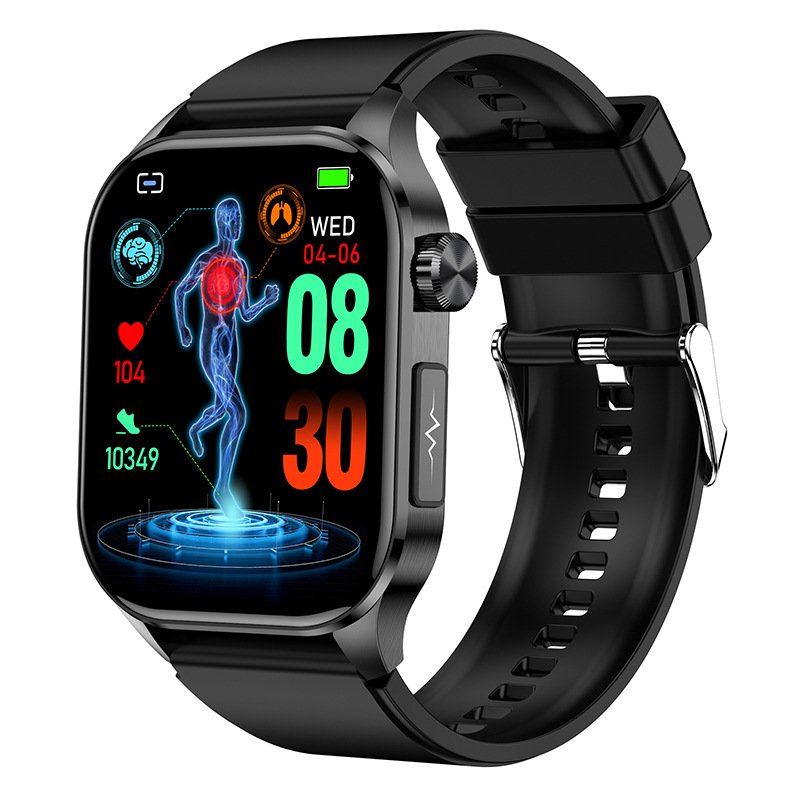
The right watch depends on who is buying it from you. Three buyer types dominate smartwatch wholesale, and each one weights the specs differently.
| Buyer type | What they care about most | Series to start with | What to confirm first |
|---|---|---|---|
| Importer / wholesaler | Price ladder across several models, steady supply, packaging that survives shipping | AMOLED Display, Bluetooth Calling, GPS Sports | Panel type in writing, battery split figures, carton packing |
| Distributor / dealer | Range depth — one model in several strap and colour options, spare parts | Bluetooth Calling, Women & Fashion, 2-in-1 Watch + Earbuds | Lug width and strap SKUs, spare straps and cables, app languages |
| E-commerce seller | The two features that sell first online — AMOLED screen and Bluetooth calling — plus honest listing copy | AMOLED Display, 2-in-1 Watch + Earbuds, Health Monitoring | Real battery figures for the listing, NFC wording, water rating wording |
Importers buy in volume and sell on. They need a price ladder: a value TFT model at the bottom, a mid-range AMOLED calling model in the middle, and a GPS or 2-in-1 model at the top. The check that matters most is consistency across the batch — three samples tested the same way, so a bad batch shows up before the container ships.
Distributors and dealers sell to shops, and shops sell to walk-in buyers who try the watch on. Strap range matters here more than anywhere else: the ET580 ships with silicone, leather, nylon, and steel strap options across 14 SKUs in six colours, so one model covers several buyers. Lug width decides whether a buyer can fit a replacement strap — most non-Apple smartwatches use 20mm or 22mm, and a 2mm mistake turns into a return. See our strap compatibility guide.
E-commerce sellers live or die by the listing. The two features that sell first online are the AMOLED screen and Bluetooth calling, and the two complaints that come back first are battery life and NFC. Honest listing copy is the cheapest return prevention there is.
One more check applies to all three types: the companion app. Ask the supplier for the app name, check the listing yourself on Google Play and the App Store, and get the minimum Android and iOS versions in writing. A watch with 27 watch languages is no help if the app is only in two. Our companion app guide gives the full pre-order checklist.
Questions to Ask a Supplier Before You Order
Put these in writing, in the purchase order or the spec confirmation, not in a chat message. A supplier who can answer all of them has tested the product. A supplier who cannot answer the first three has not.
- Display: Is the panel AMOLED or TFT LCD, stated by name? What is the resolution, and what glass is fitted — tempered glass or solid sapphire?
- Water resistance: Which standard was the rating tested to — IEC 60529 with depth and duration, or ISO 22810? Can you send the test report, and does the rating belong to this exact model?
- Battery: What test conditions sit behind the quoted figure — brightness, Bluetooth, GPS, always-on display? What is the capacity in mAh, and is the figure for heavy use, light use, or standby? How long does a full charge take, from 0% to 100%, with which adapter — and is the charging cable included?
- Bluetooth calling: Which chip runs the Bluetooth stack, and what is the Bluetooth version? What speaker and microphone are fitted? What is the talk-time figure?
- GPS (if fitted): Single-band or dual-band, and which constellations? What is the recording interval, and can the user set it to every second? What is the battery life with GPS recording continuously, in hours?
- NFC (if fitted): Which NFC functions exactly — unlock, payment, transit, tags? If payment is claimed, which wallet, which banks, and which countries were tested — and is there a video of a real tap at a real terminal?
- App: What is the app called, where do buyers get it, and what are the minimum Android and iOS versions? Does the watch support OTA firmware updates?
- Strap and accessories: What is the lug width in millimetres, and is the connector standard or model-specific? What strap materials and colours can you order, and are spare straps and spare charging cables available?
- Commercial terms: What is the MOQ for this model, with and without OEM work? What is the lead time, and what does the warranty cover — including whether water damage is covered?
If the supplier answers with photos of a watch underwater instead of a test report, you have not verified anything.
Why Source Smartwatches Through HnThai
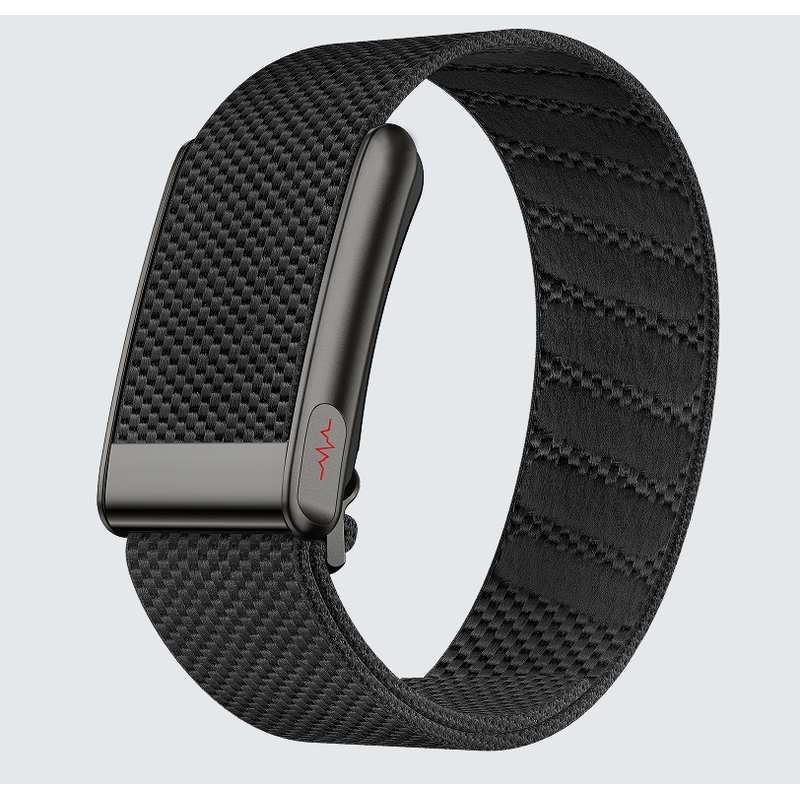
HnThai is a sourcing partner based in Huaqiangbei, Shenzhen — the electronics market where China's smartwatch supply is concentrated — with 10+ years of experience finding smart wearables for importers, distributors, and e-commerce sellers. We are a trading company, not a factory: our work is finding the right model, checking it, and shipping it.
Our catalog covers 300+ models across smartwatches, smart glasses, smart rings, and bands. The smartwatch range alone holds 200 models, with 80+ already live on our product site with full specs and photos, and more added every week. The range splits into eight series:
| Series | Representative models | Best for |
|---|---|---|
| AMOLED Display | MT300, ET580, HD300 Pro, DTG6, DA09 | Premium feel, gift and retail channels |
| Bluetooth Calling | ET570, F57, KT77, V69, X100 | Hands-free calls, business buyers |
| GPS Sports | G1000, C31, HT37, X2-B, HD21 | Sports and outdoor channels |
| Health Monitoring | F300, GE50, TK26PRO, ET585, P300 PRO | Fitness and wellness tracking |
| Outdoor & Rugged | HT38, C29, LC21, KT89, HK08 | Long battery, tough builds |
| Women & Fashion | CF37, HD12, HK82, NX17 PRO, CF39 | Fashion colours, smaller cases |
| 2-in-1 Watch + Earbuds | GT100PRO, GT95, T92, X10PRO, D8 | Bundle offers, two products in one box |
| Smart Bands | E500, P11 PLUS | Light, screen-free tracking |
Note: health monitoring features track data for fitness and wellness use. They are not medical devices.
What you get working with us:
- 1-by-1 inspection. Every watch is powered on, paired with the app, function-tested, and checked for charging and packing before it ships.
- Samples before bulk. Order a sample of the exact model you plan to stock, test it with your own phone, then place the bulk order.
- OEM/ODM on most models. Logo printing, custom packaging, and strap options vary by model. Send your logo and target quantity and we confirm what is possible.
- Related accessories in the same order. Replacement straps (20mm and 22mm, silicone, leather, metal), magnetic charging cables and docks, tempered glass screen protectors, gift boxes and custom packaging.
- 24-hour quote reply. Send your model list and quantities, and we reply within 24 hours with price, lead time, and practical suggestions.
More models are added to our product site every week. If you need a feature or a price point that is not in the list above, send us your specs and we check the catalog for you.
Frequently Asked Questions
What is the MOQ for smartwatches from China?
MOQ varies by model and by customization. Standard models can start at small trial quantities; OEM orders — logo printing, custom packaging — need a higher quantity. The MOQ also depends on whether the model is in stock or made to order. Send us the model and the quantity you have in mind, and we confirm the MOQ within 24 hours. If you are testing a new market, ask about mixed orders: you can combine different watch models, and add glasses, rings, or bands in the same shipment.
How do I know if a smartwatch battery claim is real?
Ask for split figures — heavy use, light use, and standby — plus the test conditions behind each number: brightness, Bluetooth, GPS, and always-on display settings. Then test three samples for a full week on one fixed daily profile and log the percentage at the same time each day. A supplier who can only give you one number and cannot say how it was measured is quoting a best case, not an average. Our battery life guide gives the full test plan.
Can my customers swim with an IP68 smartwatch?
IP68 alone is not a swimming rating. It is tested in still, fresh water, with the watch sitting quietly in a tank, and the depth and duration are set by the maker. It covers rain, handwashing, and brief dunks. For swimming, buy 5ATM, which is tested for pressure and is the practical baseline for pool swimming and showering. Print the exact rating and what it covers on your listing, and check whether water damage is covered by the warranty before you promise a customer that swimming is covered.
Do budget smartwatches support Google Wallet or Apple Pay?
Almost never. Tap-to-pay needs a certified wallet, a bank that supports it in the buyer's country, a screen lock, and a device that passes the wallet's security checks. Most budget watches run a proprietary system, not Wear OS, so Google Wallet cannot be installed on them at all. Their NFC usually means door unlock. If a supplier claims payment support, ask which wallet, which banks, and which countries were tested — and ask for a video of a real tap at a real terminal.
What should I check on a smartwatch sample before a bulk order?
Test three samples for a full week: pair through the companion app on both Android and iPhone, check the link survives a restart and 24 hours untouched, test Bluetooth calls on a noisy street, run GPS on a known route, charge from dead to full three times on a phone charger, and check the strap fit with calipers. Write the results down per sample, so a fault in one unit shows up against the other two. Our guides give a test plan for each area: battery, waterproofing, calling, pairing, GPS, NFC, charging, straps, and screen glass.
Can I put my own logo on the smartwatch and packaging?
Yes, OEM is available on most models: logo printing on the watch and the packaging, and custom strap options. What is possible depends on the model and the quantity. Send your logo and the model list, and we confirm the options within 24 hours. Ask for the OEM options with your first quote, so the sample and the bulk order match. If you need a sample with your logo before the bulk order, tell us when you send the inquiry so we can quote the sample with the OEM work included.
Get a Quick Quote
Tell us what you need and we reply within 24 hours with price, lead time, and practical suggestions. For an exact quote, include four things: your target market, the models or features you want, the quantity, and whether you need OEM work such as logo printing or custom packaging.
For example: "AMOLED Bluetooth calling watches, 500 pcs, red and black, for the Philippines market, logo on the box." The more specific the inquiry, the faster the quote.
Related reading: AMOLED vs TFT Smartwatch Displays · Smartwatch Battery Life Claims vs Reality · IP68 vs 5ATM Waterproof Ratings · Bluetooth Calling Smartwatches · Companion Apps and Pairing · Strap Compatibility · Sapphire vs Tempered Glass · Charging Problems · GPS Accuracy · Smartwatch NFC · How to Source Smart Rings from China · Smart Glasses with a Camera · Smartwatch OEM/ODM from China · How to Test Smartwatch Samples · Smartwatch Chipsets Explained · 2-in-1 Smartwatch with Earbuds · Smartwatch Certifications for Importers: CE, RoHS, FCC — What to Ask Before You Order