Ask smartwatch buyers what disappoints them most and battery life comes up again and again: the watch that was supposed to last a week and dies on day three. For an importer, that gap between the quoted number and real use is where returns, bad reviews and refund requests are born. Here is why the numbers never match, and how to test them before you order.
The same discipline applies to other wearables — see our guide on how to source smart rings from China.
The gap is real, and it is documented
This is not a feeling — buyers report it in public, with numbers attached. A November 2026 review analysis of a fitness tracker sold on Amazon found the maker quoted a 60-day battery while a buyer measured about 20 days in normal use — one third of the claim. In Australia, a 2025 tribunal case heard the same story at the premium end: a Galaxy Watch 6 advertised at up to 40 hours lasted 6.5 to 10.5 hours in daily use.
Your customers will not file tribunal cases. They will return the watch, leave a one-star review, and buy from someone else next time. The cost lands on you either way.
Why quoted battery life never matches real use
Suppliers rarely lie about battery life. They measure it under lab conditions that look nothing like a real wrist. A typical test profile runs the watch with Bluetooth off or barely used, screen brightness at minimum, no always-on display, no GPS tracking, no calls, and notifications switched off.
None of that is wrong as a lab test. It is wrong as a selling point. The moment a real buyer wears the watch — notifications on, screen waking dozens of times a day, a workout tracked, a call answered — the number drops. How far it drops depends on which features eat power, and that varies a lot between models.
What actually drains a smartwatch battery
If you know where the power goes, you can read a spec sheet with a much colder eye:
- Always-on display. Keeping the screen lit all day is the biggest drain on most watches. An AMOLED panel with a dark watch face handles this better than a backlit LCD — we covered the display trade-off in our AMOLED vs TFT guide — but on any watch, always-on mode can cut battery life by a third or more.
- GPS tracking. An hour or two of GPS tracking a day can halve the quoted figure on its own.
- Bluetooth calls. A watch sold for Bluetooth calling drains much faster for a buyer who answers calls from the wrist than for one who never uses the feature.
- Screen brightness and wake frequency. A bright screen set to wake on every wrist raise, in a job where the wearer moves all day, adds up to hundreds of extra wake-ups.
- Sensor sampling. Heart-rate and sleep tracking run through the night — the reason “7 days” can become 4 days for someone who wears the watch around the clock.
- Notifications and vibration. Every buzz costs power, and a buyer with a busy phone gets hundreds a day.
None of these features is a defect — they are the product working as designed. The problem is only that the quoted figure was measured with most of them switched off.
“Days of battery” means nothing without the usage profile
This is the single most useful check you can run on a supplier. Ask what “7 days” means: 7 days of what? A serious supplier answers with split figures — heavy use, light use, and standby — because they know one number hides too much.
Take the F57, one of the watches in our range. Its spec sheet does not quote a single figure. It states 6 days of heavy use, 10 days of light use, and 25 days on standby, from a 200mAh battery with magnetic charging in about 2 hours. That split tells you more than any headline number: you can see the spread between a buyer who tracks workouts and takes calls and a buyer who mostly checks the time. When a supplier can only give you one number and cannot say how it was measured, treat that number as the best case, not the average.
How to test battery life on samples
Do not trust the spec sheet, and do not trust a single day of testing either. Run a fixed test on three samples at once:
- Write down one daily profile and use it on every sample. For example: brightness at 50%, notifications on, always-on display off, one 30-minute tracked workout, one 10-minute Bluetooth call, worn overnight for sleep tracking.
- Charge to 100%, then log the percentage at the same time each day. Three samples side by side tell you whether the result is consistent or whether one unit is faulty.
- Test standby separately. Leave one sample untouched overnight and note the drain. A watch that loses 10% overnight with nothing running has a firmware or hardware problem, not a battery problem.
- Time a full charge. A watch that lasts 7 days but takes 4 hours to charge is a worse product for a buyer who charges overnight than a 5-day watch that fills in 90 minutes. Check whether the charger is included in the quoted price — it often is not.
Run the test for a full week — a one-day test tells you almost nothing, because the first day always looks good on a new battery.
What to ask the supplier before you order
Put these in writing, in the purchase order or the spec confirmation, not in a chat message:
- What test conditions sit behind the quoted battery figure — brightness, Bluetooth, GPS, always-on display?
- What is the battery capacity in mAh, and is the quoted figure for heavy use, light use, or standby?
- How long does a full charge take, and is the charging cable or dock included?
- Is there a battery warranty, and what happens if capacity drops sharply in the first year?
If the supplier cannot answer the first question, you have your answer about the number.
What to print on your own listing
Honest battery wording sells better than a big number that falls apart. Quote the range tied to use — “up to 10 days light use, 6 days heavy use” — instead of a single best-case figure. Say what the figure assumes in one line. A return costs you the shipping both ways, the refund, and the review. An honest line on the listing costs you nothing.
A watch from our range
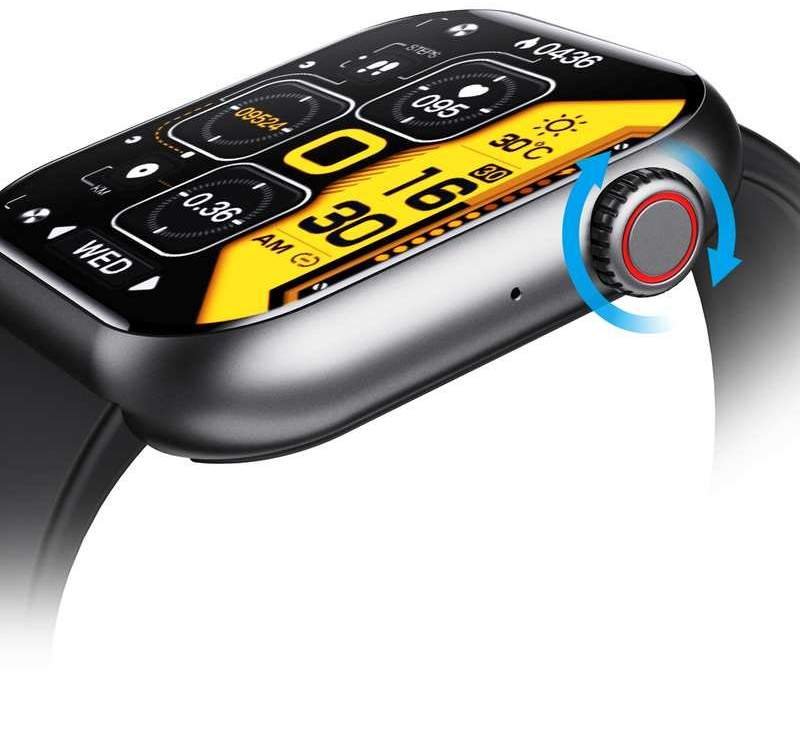
The F57 smartwatch runs a 1.91-inch IPS LCD display with Bluetooth 5.3 calling, a rotating encoder, and 50 sport modes. Its battery is rated at 6 days of heavy use, 10 days of light use and 25 days standby from a 200mAh cell, with magnetic charging in about 2 hours.
Test the sample the way your customer will use it, and the battery figure stops being a gamble.
Related reading: Smartwatch Sourcing Guide — How to Choose a Smartwatch Supplier in China
Why does my smartwatch battery last fewer days than the supplier claimed?
Suppliers usually measure battery life in lab conditions that look nothing like real use: Bluetooth barely used, brightness at minimum, no always-on display, no GPS, no calls and notifications off. Real buyers switch those features on, and the number drops. Always-on display alone can cut battery life by a third or more, an hour or two of GPS tracking a day can halve the quoted figure, and Bluetooth calls, bright screens and overnight tracking all add drain. The gap is documented: one buyer measured about 20 days from a tracker quoted at 60 days. Ask what the quoted figure assumes, and test samples under a fixed daily profile before you order.
What battery figures should I ask a supplier to state in writing?
Ask for split figures, not one headline number: heavy use, light use and standby, with the test conditions behind each — brightness, Bluetooth, GPS and always-on display settings. Ask for the battery capacity in mAh, the charge time and whether the charger is included in the quoted price. The F57 in our range shows how a spec sheet reads: 6 days of heavy use, 10 days of light use and 25 days on standby from a 200mAh battery, with magnetic charging in about 2 hours. When a supplier gives one number and cannot say how it was measured, treat that number as the best case, not the average, and confirm the split figures in writing before ordering.
How should I test smartwatch battery life on samples?
Run a fixed test on three samples at once for a full week, since a one-day test tells you almost nothing. Write down one daily profile and use it on every sample — for example brightness at 50%, notifications on, always-on display off, one 30-minute tracked workout, one 10-minute Bluetooth call, and overnight wear. Charge to 100%, then log the percentage at the same time each day, and test standby separately: a watch that loses 10% overnight with nothing running has a firmware or hardware problem. Time a full charge too, and check whether the charger is included in the price.
If you want samples checked before ordering, or help comparing battery specs across models, talk to us. You can also browse our products and our smart wear range. We source from Huaqiangbei daily and test every batch before it ships.