The AI in smart glasses does four jobs: real-time translation, image recognition, a voice assistant, and audio recording with transcription. The MT9 runs all four through the Doubao engine, translates across more than 130 languages, and carries a 265mAh battery with a 3-hour case charge — but every feature runs through the phone app, so test it on the sample.
What the AI Actually Does
| Function | On the MT9 | What to test |
|---|---|---|
| Real-time translation | 130+ languages, bidirectional dialogue | Your buyer's language pair, live, in noise |
| Image recognition | AI image recognition, AI photo capture, photo translation | Signs and menus in low light |
| Voice assistant | AI voice assistant, AI Q&A, voice commands | Wake word, questions in noise, reply volume |
| Audio recording | Recording with transcription and translation | Transcription accuracy, file storage, LED indicator |
| AI video recording | 8MP camera, Wi-Fi transfer | Clip length, transfer speed |
The word AI covers all five rows — pin the supplier down to functions and test each one on the sample. If you are still choosing the frame type, start with our Smart Glasses Sourcing Guide.
Translation: The Feature Buyers Ask About First
Translation is the feature buyers ask about first — read the language count carefully. The MT9 translates text and voice across more than 130 languages; its AI assistant covers 145 and its app speaks 40. The CY08 covers 19 languages, including call and photo translation; the HD5 Ultra 26 with voice wake-up. Those are three different counts — a quote that mixes them up will mislead your buyer.
In real use, translation works well for text and for speech the wearer only hears. Hands-on tests of Google's smart glasses found text translation worked well, and speech translation kept up with TV and station announcements. One-on-one conversation worked too, but with a noticeable delay. Accuracy drops with background noise, accents and fast speech: one traveller's glasses heard "vegetarian broth" as "very good growth" in a Kyoto ramen shop.
Test translation live with your buyer's language pair, not the demo pair, and ask where the processing happens — on the device, or in the cloud. A translation that needs a connection fails on a flight or in a dead zone.
Image Recognition and Photo Capture
The MT9's camera does more than take photos: AI image recognition identifies what the camera sees, AI photo capture takes the shot on voice command, and photo translation reads signs and menus. The camera is 8MP at 4032×3016, and files move to the phone by Wi-Fi.
The limits show up in low light and in noise. Reddit users of Looktech AI glasses report lower accuracy in low light and noise, and the glasses can freeze when translation and recording run together. They also report a 2–3 second lag syncing with the companion app. Test recognition on signs and menus in dim light, and the Wi-Fi transfer on a full clip. Our camera glasses guide covers the camera checks in full.
Voice Assistant and Calls
The MT9 runs an AI voice assistant with AI question-and-answer through the Doubao engine, plus voice commands and music control; the CY08 answers voice commands through a ChatGPT-class model. Two ENC microphones pick up the voice, and dual 1210 speakers play the answer.
Test the reply volume in a quiet room. One Rokid review reports the AI replies so loudly the whole room can hear it — a small thing that decides whether a buyer wears the glasses at work. Test the wake word with street noise behind you, and check the assistant still works after an app update — the MT9 supports OTA upgrades.
Recording, Transcription, and Privacy
The MT9 records audio with transcription and translation, and video with AI capture. The LED flashes once for a photo and stays solid during video — the minimum a privacy-sensitive buyer will accept. The HD5 Ultra and the X01 cap one video clip at 12 minutes — a limit that belongs on the listing.
Ask where the recording is processed and stored. Cloud processing only happens for features that need it — but the buyer will ask you, so get the answer in writing. Recording drains the battery faster than music: the MT9's 265mAh battery charges in 3 hours through its case. The battery numbers are in our battery life guide.
Choosing AI Glasses by Buyer Type
Travel retail should start with the MT9, whose 130-language translation is the story; distributors should pair it with the CY08 for a second price point; e-commerce sellers should lead with one hero function and print the language count honestly. For the lens side of the same frames, read our lens options guide.
Featured Model: The MT9
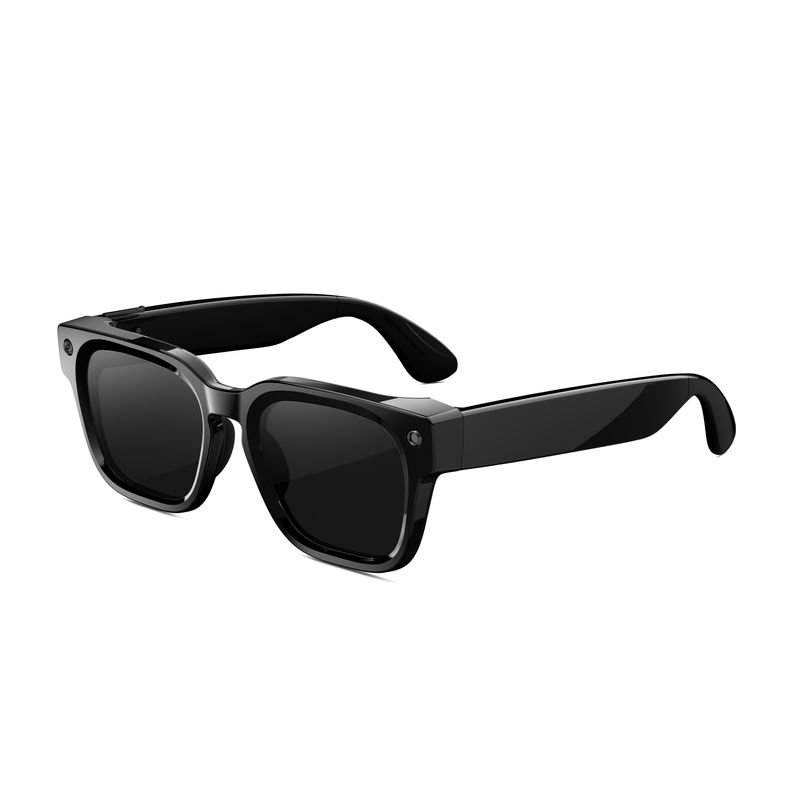
The MT9 is the translation-led frame in our range: an 8MP camera at 4032×3016, BLE 5.4, dual 1210 speakers and dual ENC microphones, and Doubao AI features — voice assistant, Q&A, translation, recording, photo capture and image recognition. It weighs 42g with the lens and charges in 3 hours through a 200g case. The app speaks 40 languages and runs on Android 5.0+ and iOS 10.0+.
Frequently Asked Questions
How many languages do AI smart glasses translate?
It depends on which count you mean. The MT9 translates text and voice across more than 130 languages, its AI assistant covers 145, and its app speaks 40 — three different numbers for three different functions. The CY08 covers 19 languages and the HD5 Ultra 26. Test the pair your buyer actually speaks: a translation feature that only works in the demo language is not a feature. The app language count matters too: if the app does not speak your buyer's language, the glasses are hard to set up even when translation itself covers it.
Does AI translation work without an internet connection?
Usually not for the full feature set. Translation, recognition and Q&A run through the phone app, and most need a connection to a server. Ask where the processing happens — on the device, or in the cloud — and test the sample in a dead zone before you promise anything offline. If the answer is vague, assume the feature needs a connection and say so on your listing. A translation that only works online also stops the moment the buyer roams without data — test that case on the sample, not after the order ships.
What should I test on an AI smart glasses sample?
Six things: translation live with your buyer's language pair; recognition on signs and menus in low light; the wake word and a question with street noise; the reply volume in a quiet room; the longest single clip and the recording LED; and app pairing on your buyer's phones, twice. Check the battery too: the MT9 charges in 3 hours through its case, and recording drains it faster than music. A sample that passes all six is a model you can put your name on.
Talk to HnThai About Your Smart Glasses Order
HnThai is a sourcing partner based in Huaqiangbei, Shenzhen. We test translation, recognition, voice control and recording on the sample, and put the numbers in your quotation. See the full range on our smart glasses page, browse all products, or contact us — we reply within 24 hours with a quotation.