A stock sample from China costs $0–$30 plus $15–$60 courier and arrives in 8–17 days. A custom sample costs $50–$200 and takes 7–15 days to make. The buyer usually pays both, and most suppliers credit the fee against the first order — but that refund only counts if it is agreed in writing before you pay.
A sample is not one thing: four types, four prices
Buyers often ask for "a sample" without saying which one — then judge the supplier on the wrong thing. A stock sample shows the finish of a product the factory already makes; a custom sample shows whether the factory can build your version; a pre-production sample shows whether the run will match what you approved. Each answers a different question, at a different price.
| Sample type | What it proves | Typical cost | Lead time |
|---|---|---|---|
| Stock sample | Finish of an existing product | $0–$30 + courier | 3–7 days to ship |
| Stock + logo/colour | Your logo on a stock product | $20–$80 | 5–10 days |
| Custom sample | Factory can build your spec | $50–$200 | 7–15 days |
| Custom, new tooling | A new shape works | $300–$2,000+ | 15–30 days |
| Electronics, PCB/firmware | Board, firmware, app | $500–$3,000+ | 20–45 days |
| Pre-production sample | Production materials, process | $50–$300 | 7–15 days |
Two numbers catch first-time buyers out: electronics with a PCB or firmware change run $500–$3,000 or more and 20–45 days, and a sample unit usually costs more than the bulk unit price — small buyers are often charged the FOB price or double it.
Who pays — and the refund that is never automatic
The standard practice: the buyer pays for the sample and the courier, and the supplier refunds the sample cost against a bulk order. Large, regular buyers are more likely to get samples free; a new buyer asking for a free custom sample is asking the factory to absorb setup, labour, and material waste on a one-off unit.
The catch: the refund is not automatic. Alibaba's own buyer guidance says you can ask for the sample cost to be taken off a full order — but you have to ask, and get it in writing, before you pay. Put three lines in the order message: the sample fee, who pays the courier, and the exact refund terms. A supplier who will not put the refund in writing is telling you something about the bulk order.
Tooling is a separate line: a new mould runs $300–$2,000 or more at the sample stage, and $1,000–$10,000 or more for the mould itself. Agree in writing who owns it — paying for a tool the factory keeps is a common first-order mistake.
The courier is often the bigger bill
On a single unit, the freight can cost more than the product. Express courier from China runs about $15–$60 for a small parcel to the US, and $20–$40 per kilogram under 21 kg, charged on the higher of actual and volumetric weight.
Three ways to keep the bill down: consolidate samples from several suppliers through one agent, saving $30–$60 per supplier; ask for photos and a short video before shipping; and sample three suppliers at once, so the fees land in the same week.
Customs has also changed the maths: the US suspended its $800 de minimis relief on 29 August 2025, and the EU ended its €150 duty relief on 1 July 2026 — check your market's current position before you order.
Red flags in a sample quote
- Unlimited free custom samples. Sample production costs a factory money and disrupts a line. A supplier absorbing that cost without hesitation is often a trading company, not the manufacturer.
- A "sample" that is really a sales unit. The sample you receive is often not made on the line that will make your production run. That is why the pre-production sample — production materials, production process — is the one that matters most, and the one most buyers skip.
How to run a sample round that actually decides something
Sample three suppliers, not one: one tells you whether a supplier is good; three tell you which one is best, side by side, on the same brief. A three-supplier round runs about $50–$400 in sample fees plus courier — cheap insurance against a five-figure mistake.
Give all three the same spec, artwork file, and deadline. Score each sample on the same points — finish, dimensions, screen, charging, app pairing, packaging — then keep the winner as a sealed golden sample. Both sides sign it; the bulk run is judged against it. A $100 sample that reveals a wrong shade of blue saves a container of the same problem.
Pay by a traceable method: on Alibaba, a card or PayPal costs 2.99%, which usually beats a wire fee of around $40 on a small sample. A bank transfer to a company account is fine for a supplier you have already checked.
A real example: the ET580
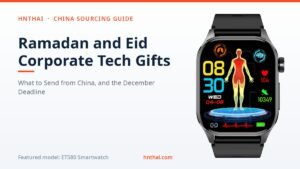
The ET580 smartwatch carries a 2.04-inch AMOLED display (368×448), a 380mAh battery with 3–5 days of use and 20+ days of standby, IP68 water resistance, Bluetooth 5.2 BLE, magnetic charging in about 3–4 hours, and the H Band app, on a JL7013A chip.
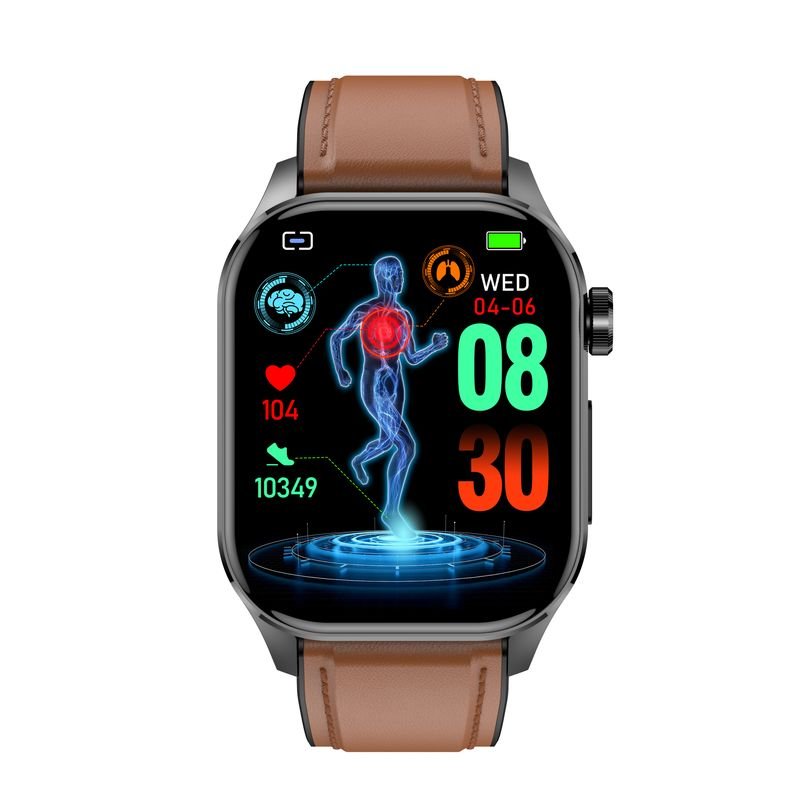
On an ET580 order, the checks write themselves: the stock sample proves the screen, finish, and strap; the custom sample proves the logo and packaging; the pre-production sample proves the batch matches the approved unit. Get the fee and refund terms in writing before you pay.
See our Smartwatch Sourcing Guide, supplier verification guide, MOQ guide, and quotation guide. Browse our products page and smartwatches page.
Frequently Asked Questions
Who pays for samples from China?
Usually the buyer. You pay the sample fee and the express courier, and the supplier credits the sample cost against your first bulk order. Regular buyers are more likely to get samples free; a new buyer should expect to pay, especially for a custom sample. A stock sample is the cheapest test — $0–$30 plus courier — while a custom sample runs $50–$200. Get the fee, the courier payer, and the refund terms in writing before you pay, because the refund is never automatic.
Are sample fees refunded against a bulk order?
Most suppliers credit the sample fee against a bulk order, often 50–100% of a custom sample fee — but only if agreed in writing before paying. The refund is not automatic: ask for the fee to come off the first order, and get it confirmed in the order message. Tooling differs: a mould fee of $300–$2,000 or more is sometimes only partly refunded, so agree in writing who owns the mould. Courier fees are almost never refunded.
How many samples should I order before choosing a supplier?
Three, from three different suppliers, on the same written brief. One sample tells you whether a supplier is good; three tell you which one is best, side by side. Score each on the same points — finish, dimensions, screen, charging, app pairing, and packaging. Keep the winning unit sealed and signed as the golden sample, and judge the bulk run against it. The round costs about $50–$400 in sample fees plus courier.