
The MT9 weighs 42 grams, and the HD5 Ultra weighs 35 grams — both sit inside the 35–50 gram band of ordinary spectacles. A Ray-Ban Meta runs 48–50 grams, and a display frame like the RayNeo X3 Pro measures about 76 grams. Weight is the first number to check on a sample.
What the Weight Numbers Mean
Everyday spectacles weigh between 35 and 50 grams — the comfort baseline your buyer already knows. A smart glasses frame adds a battery, a chip, microphones and speakers to that same shape, so anything inside the band feels familiar and anything above it starts to press.
| Frame | Weight | What it means for the buyer |
|---|---|---|
| Everyday spectacles | 35–50g | The baseline — all-day wear, no complaints |
| HD5 Ultra | 35g | Inside the baseline; camera, 300mAh battery, IP65 |
| MT9 | 42g | Inside the baseline; 8MP camera, 265mAh battery, 130+ language translation |
| Ray-Ban Meta | 48–50g | Top of the baseline; most buyers accept it |
| RayNeo X3 Pro | About 76g | Roughly double the baseline; display frames pay for the screen in grams |
| Birdbath display frames | 150–200g | Three to four times a normal frame; short sessions only |
The table makes the trade visible. Camera-only frames can stay inside the everyday band — the MT9 carries an 8MP camera, translation and Bluetooth audio at 42 grams, and the HD5 Ultra carries a camera and a 300mAh battery at 35 grams. A display frame cannot: the X3 Pro packs a 12MP camera and dual MicroLED displays into about 76 grams, and birdbath optics push toward 150–200 grams. If your buyer wants all-day wear, start with a camera frame and add a display frame only when the channel asks for the screen by name. Our Smart Glasses Sourcing Guide walks through that choice in full.
Why Buyers Send Them Back
Discomfort is the complaint that shows up in reviews after the battery complaint, and it is the one most often missed in a quotation. A reviewer who wore the 33-gram RayNeo iO for 90 minutes straight still felt relief when he took them off — not because of the total weight, but because the protrusion at the end of each temple pressed between his ears and his skull, and the frame pressed on the top of his nose. Thirty-three grams, and still uncomfortable. The number alone does not tell the story.
Three pressure points do the damage: the nose bridge, the skin behind the ears, and the sides of the head where the temples clamp. User studies cited in a comfort research summary put it plainly — frames in the 50–80 gram range concentrate pressure above 15 kPa on the nose pads, and complaints typically emerge after 45 to 60 minutes of wear.
A buyer who takes the glasses off by lunch does not recommend them and leaves a review that says "too heavy" — and that review sticks to your listing, not to the factory. Weight is the cheapest defect to catch before the order ships: put the sample on a kitchen scale and write the number down.
Balance Matters as Much as Grams
Two frames can weigh the same and feel different, because where the weight sits matters as much as how much there is. Batteries, chips and speakers live in the temple arms, so most smart glasses are rear-heavy; a front-heavy frame slides down the nose, and a rear-heavy frame presses behind the ears. RayNeo publishes an exact figure for one model — the Air 3s Pro is built with a 46.7% front, 53.3% rear split, engineered to keep the frame from sliding.
Test balance on the sample the way a buyer will wear it: put the glasses on, look down at a phone, then look up — if the frame slips when you look down, the front is too heavy. Wear them for a full hour, not five minutes, and check the nose pads — soft silicone pads spread the weight over a larger area than hard plastic. For cycling frames, where helmet fit and fogging matter as much as weight, see our cycling smart glasses guide.
Fit Checks Before You Order
Weight and balance are only half the check. Fit is the other half, and it is the part a spec sheet most often leaves out. The CY06 spec sheet, for example, gives no weight figure at all — the number has to be weighed on the sample and confirmed in writing before the order, not guessed from the listing.
Ask for four dimensions and print them on your listing: hinge-to-hinge width, lens width, bridge width, and temple length. The MT9 measures 133mm hinge to hinge, with a 51mm lens, a 22mm bridge and a 153mm temple — an optician can judge fit from those four numbers alone, and a buyer with a wide face can rule the frame in or out before ordering. If the supplier cannot give you the dimensions, measure the sample yourself and put your own numbers on the listing.
The same rule applies to lens options. Prescription inserts add weight and change the balance — ask whether the frame takes standard inserts, what size range they come in, and how much the insert adds. See our lens options guide for the lens choices.
Choosing by Buyer Type
E-commerce sellers should lead with the weight on the listing — "42g" next to the first photo, with the four dimensions below it — because that is the number a buyer compares before clicking buy. Distributors should carry two frames at two weights: a light camera frame for all-day wear and a heavier display frame for buyers who ask for the screen. Importers should write the weight and the dimensions into the quotation so the next batch matches the sample. The battery numbers behind the weight trade are in our battery life guide.
Featured Model: The MT9
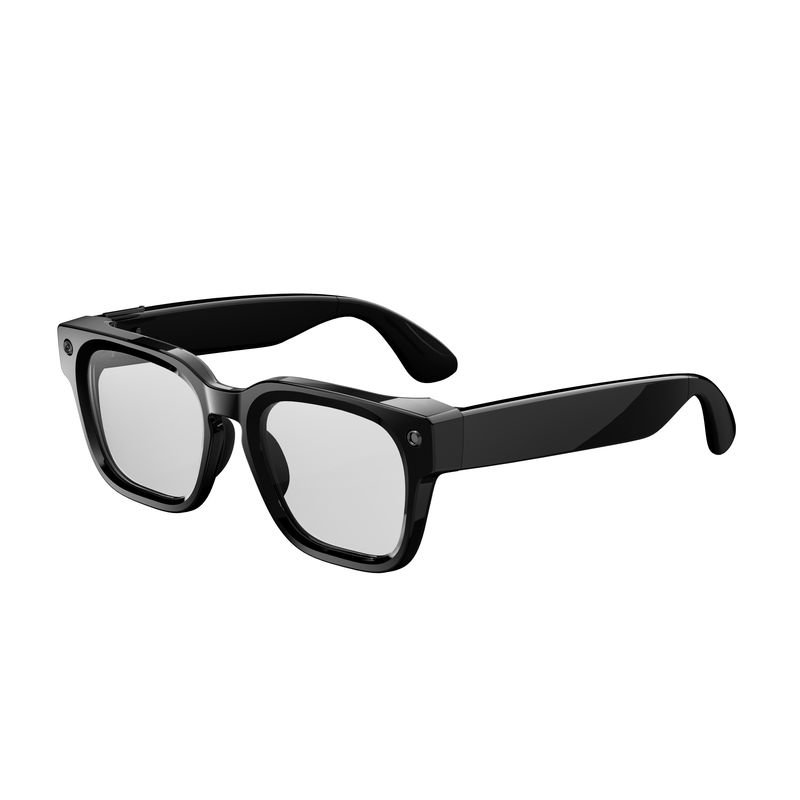
The MT9 is the light frame in our range: 42 grams with the lens, an 8MP camera at 4032×3016, BLE 5.4, dual 1210 speakers and dual ENC microphones, and Doubao AI features — voice assistant, Q&A, translation across 130+ languages, recording, photo capture and image recognition. It charges in 3 hours through its folding case.
Frequently Asked Questions
How heavy should smart glasses be for all-day wear?
Inside the everyday spectacles band of 35–50 grams. The MT9 weighs 42 grams and the HD5 Ultra 35 grams, and both stay in that band with a camera and a battery on board. A frame at 48–50 grams, like the Ray-Ban Meta, is still accepted by most buyers; a display frame at about 76 grams is a different product — heavier, and worn for shorter sessions. Put the sample on a scale before you order: if the sheet says 42 grams and the scale says 62, the supplier is guessing, and the next batch will not match the sample either.
Does weight or balance matter more for comfort?
Both, and balance is the one buyers forget to check. A 33-gram frame can still hurt if the temple ends press behind the ears, and a front-heavy frame slides down the nose no matter how light it is. Test the sample for a full hour, look down and up, and check whether it slips. Soft silicone nose pads spread the weight over a larger area than hard plastic, and a published front-rear split — RayNeo quotes 46.7% front, 53.3% rear on the Air 3s Pro — shows the frame was designed for comfort, not just assembled.
What dimensions should I ask the supplier for?
Four: hinge-to-hinge width, lens width, bridge width, and temple length. The MT9 measures 133mm, 51mm, 22mm and 153mm. Print them on the listing so buyers can judge fit before they order, and ask whether prescription inserts fit and how much weight they add — an insert changes the balance as well as the total. A temple that is too short slides forward on a larger head, and a bridge that is too narrow pinches. If the spec sheet gives no weight at all — the CY06 sheet does not — weigh the sample yourself and get the real number in writing before the deposit.
Talk to HnThai About Your Smart Glasses Order
HnThai is a sourcing partner based in Huaqiangbei, Shenzhen. We weigh the sample, measure the frame, and put the real numbers in your quotation. See the full range on our smart glasses page, browse all products on our products page, or contact us with the models and quantities you have in mind — we reply within 24 hours with a quotation.