Sourcing smart rings from China means finding a supplier who can prove four things on a sample before you order: the sizes fit real fingers, the battery lasts as long as the spec sheet says, the sensors read steadily, and the app pairs and stays connected. Test each one first, and you order a ring buyers keep wearing.
Before You Read: This guide is written for importers, distributors, and e-commerce sellers who buy smart rings in bulk from China. It covers how to read a spec sheet, which claims to test on samples, and how to match models to your buyers. If you already know which models you want, skip to the model list near the end. For the watch side of the category, see our Smartwatch Sourcing Guide.
What Smart Ring Sourcing from China Involves
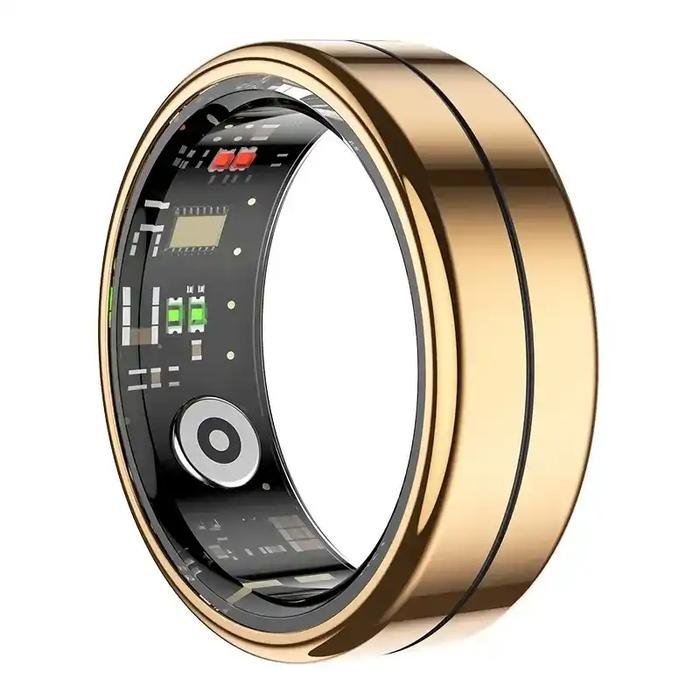
A smart ring is a small sensor pack worn on a finger. Inside a band a few millimetres wide sit an optical heart-rate sensor, an accelerometer, a temperature sensor, a small battery, a Bluetooth chip, and a charging contact. The ring talks to a phone app, and the app turns the raw readings into sleep, activity, and recovery summaries. There is no screen, no speaker, and no room for a big battery — the whole product lives or dies on fit, battery life, and sensor stability.
Most wholesale smart rings come from Shenzhen, where the factories that build them also build the watches and earphones in the same catalogs. A ring order is different from a watch order in one practical way: a watch comes in one size and fits most wrists, while a ring order has to cover a spread of finger sizes. A typical wholesale order for one model ships in sizes 6 to 13, and the size split — how many pieces of each size — is part of the order, not an afterthought. Get the split wrong and you hold stock in sizes nobody buys while the sizes your customers need run out.
Sourcing from China means buying from those factories, usually through a sourcing partner who checks the sample, reads the spec sheet line by line, and puts the numbers in writing in the quotation. The checks in this guide are the same ones we run before we quote a model: sizing kit behaviour, battery under real use, sensor readings over a week, charging contact reliability, and app pairing on both Android and iOS. A supplier who answers those checks in writing is a supplier you can plan around.
The buyers for smart rings fall into three groups. Importers buy by the carton for retail chains and want a stable model with a known defect rate. Distributors buy a range of sizes and colours for resellers and care most about the size split and the return policy. E-commerce sellers buy smaller lots, list fast, and live or die by the review score — one sizing complaint in the first ten reviews can sink a listing. The rest of this guide is written so each of those buyers can pull out the checks that matter to them.
Why Smart Rings Get Returned: Five Pain Points Buyers Meet First
Returns are where a smart ring order makes or loses money, and the reasons are more predictable than most sellers expect. The five below show up again and again in buyer reviews, forum threads, and support tickets. Read them before you place an order, because each one maps to a check you can run on a sample.
1. The size is wrong. A ring that is half a size off either slides around and loses sensor contact, or pinches and comes off. Oura, the best-known ring brand, ships a free plastic sizing kit with every order and tells buyers to wear the sizer for at least 24 hours before confirming a size — and its own support pages say the kit exists because sizing mistakes are the most common reason for a return. Oura allows one size exchange per order. For a wholesale buyer, the lesson is plain: never order a size run without a sizing kit in hand, and never trust a US ring size chart to map onto a Chinese ring model. Ring sizes differ between brands and between generations of the same brand.
2. The battery does not last as long as the listing says. A ring battery is tiny — 15 to 20mAh in most wholesale models — and the "7 days" on a spec sheet usually means light use with few sensor readings. Heavy use, frequent syncing, and cold weather all cut into it. Independent long-term tests of retail rings land in the lower half of the claimed range, and the gap between claim and reality is the second most common complaint in reviews. Test battery life on a sample for a full week, on your own wrist, before you print a number on your listing.
3. The sensor readings look wrong to the buyer. A ring measures heart rate, blood oxygen saturation, temperature change, and movement, and turns them into sleep and activity summaries. Buyers compare those numbers with their watch or their own sense of how they slept, and when the numbers disagree they blame the ring. Long-term tests show resting heart rate readings usually land within 2 to 3 beats per minute of a reference device, while exercise readings can run 5 to 10 beats off, and step counts can run 15% off. The readings are trends, not lab results, and a listing that promises more than that invites returns. Rings are not medical devices, and no supplier spec sheet should be read as a medical claim.
4. The ring stops charging. The charging contact is the most-handled part of the product. Dirt, sweat, and skin oil build up on the small metal contacts, and a ring that worked for a month stops taking a charge. Most charging failures trace back to dirty contacts, not a dead battery. The fix is boring but real: clean contacts, a charging case that holds the ring firmly in place, and a spare cable in the box. Ask the supplier how the case holds the ring and what the warranty covers — a lost charging case is usually not covered, and a replacement case can cost as much as the ring's margin.
5. The app surprises the buyer. Some ring apps charge a monthly fee for full data, some drop features after a free period, and some only work well on one phone platform. A buyer who paid for hardware and then finds the sleep data locked behind a subscription will leave a one-star review and ask for a refund. Before you order, open the app yourself, pair a sample, and write down what is free and what is paid. Put that in your listing so the buyer knows before they buy.
Sizing: The One Check That Decides Your Return Rate
Sizing is the first check because it decides the most returns. A smart ring has no strap to adjust, so the size has to be right at the factory gate. Wholesale models typically ship in sizes 6 to 13, and the inner diameter runs from about 17.5 mm at size 7 to about 22.4 mm at size 13. Half sizes do not exist in this category — if a buyer falls between sizes, the usual advice is to take the smaller one, because a snug ring reads better than a loose one, and fingers shrink slightly in the cold and swell in heat.
Order a sizing kit with your first sample order. The kit is a set of plastic rings in each size, and your team should wear the sizer for a full day — including overnight — before picking sizes. Fingers change size through the day, and a ring that fits in the morning can feel tight by evening. Test on the index, middle, and ring fingers, because buyers wear rings on different fingers and the sensor needs skin contact on the palm side of the finger to read well.
For the size split on a bulk order, ask the supplier for the sell-through by size from their last three orders in your market, and weight your order toward the middle sizes. The ends of the range — sizes 6 and 13 — sell slowly, and dead stock in odd sizes is the quiet cost of a ring order. Agree the exchange rule in writing before you pay: who pays return shipping on a wrong size, and how many exchanges are allowed per order.
We cover the full sizing process, including how to run a sizing kit test and how to plan a size split, in Smart Ring Sizing: Why Size Kits Decide Your Return Rate.
Battery Life: How to Read the Claim
Battery life is the number buyers quote back to you, so read it the way a tester would. The claim on a spec sheet is a lab number: a stated battery capacity, a stated number of days, and a stated standby time, each measured under conditions the sheet rarely spells out. Your job is to translate that claim into what your buyer will actually get.
Start with capacity. Most wholesale smart rings carry a 15 to 20mAh cell, and the cell size grows slightly with ring size — the R04, for example, carries 15mAh in sizes below 9 and 18mAh in size 9 and above, because a bigger ring holds a bigger cell. The R22 carries 16mAh in larger sizes and 13mAh in smaller ones. A ring that claims 7 days from a 15mAh cell and a ring that claims 7 days from a 20mAh cell are not making the same claim; the second one has more room for error.
Then look at the three numbers together: days of typical use, days of standby, and charging time. A ring that lists 5 to 7 days of use and 15 days of standby is telling you the sensors and the Bluetooth radio are the drain, not the idle current. A ring that lists only one number is hiding the test conditions. Charging time matters too: most rings charge in about 1.5 hours on a magnetic cable, and a charging case changes the picture entirely — the R04's 200mAh case refills the ring about 11 times, which turns a 5-day ring into a month without a wall socket.
| Model | Battery (ring) | Typical use | Standby | Charging |
|---|---|---|---|---|
| R04 | 15mAh (18mAh, size 9+) | 5–7 days | 15 days | ~1.5 h magnetic cable; 200mAh case, ~11 charges |
| R21 | 16mAh | 5–7 days | Confirm before ordering | ~1.5 h magnetic cable |
| R22 | 16mAh / 13mAh | 5–7 days | 15 days | ~1.5 h magnetic cable |
| R88 | 15–20mAh | 3–5 days | 7–9 days | 1.5–2 h; charging case optional |
| R20 | 15mAh | 3–5 days | Confirm before ordering | Magnetic charging |
Test the claim on a sample for a full week before you order. Wear it day and night, sync it twice a day, and write down the day it dies. If the sample dies on day 4 and the sheet says 7, print 4 to 5 days on your listing and keep the returns down. For the full testing method, see Smart Ring Battery Life: 5-Day vs 7-Day Claims, What to Test.
Sensors: What a Ring Can Measure, and What It Cannot
The sensor set is where most listings overpromise. A wholesale smart ring typically carries three sensors: an optical heart-rate sensor (green and red LEDs against the skin), an accelerometer that tracks movement and steps, and a temperature sensor that tracks skin temperature change overnight. Some models add a blood-oxygen sensor. The R04 pairs an HX3918 heart-rate sensor with an STK8321-W accelerometer; the R22 uses an HX3697 dual-PD heart-rate sensor with an ST LIS2DOC accelerometer and a separate temperature sensor.
What those sensors do well is trends. Resting heart rate overnight, heart-rate variability direction over a week, sleep timing, and step counts are all readings a ring can track steadily when it fits well. What they do poorly is single-number precision during exercise: a loose ring, a cold hand, or a fast arm swing can all lift the sensor off the skin for a moment, and the reading jumps. Long-term tests put exercise heart-rate error at 5 to 10 beats per minute against a chest strap, and step counts about 15% off over a day. That is normal for the category, not a defect in one model — but a listing that quotes a single heart-rate number as a fact will get returns from buyers who tested it on a run.
Write your listing around what the sensors do, not what they sound like. "Tracks resting heart rate, sleep stages, and daily steps" is a fair claim. Anything that sounds like a diagnosis is not — rings are not medical devices, and the spec sheet lists functions, not clinical accuracy. If a supplier's sheet claims a medical-grade result, ask for the test report behind it; if there is no report, leave the claim out of your listing.
We go through each sensor, what it measures, and how to explain the limits to buyers in Smart Ring Sensors Explained: What They Measure and What They Don't.
Materials: Titanium vs Stainless Steel vs Ceramic
The material decides how the ring feels, how it wears, and what it costs. Three materials cover nearly all wholesale smart rings, and each one suits a different buyer.
Stainless steel is the workhorse. It is the most common case material in wholesale rings — the R04, R21, and R22 all use it — because it takes a polish well, resists scratches better than plastic, and keeps the price down. A stainless ring weighs around 2.7 grams in a middle size, which most buyers forget they are wearing. The trade-off is that steel can feel cold at first and shows fingerprints on a polished finish.
Titanium is lighter and harder, and it is the material premium retail rings are built from. It costs more, and the machining is harder, so wholesale titanium rings are fewer and dearer. Buy titanium when your buyer sells on feel and finish rather than on price, and confirm the grade in writing — "titanium" on a quote without a grade number is a word, not a spec.
Ceramic is the looker. A black ceramic ring like the R20 has a smooth, warm finish and a weight of 3.6 to 4.5 grams, and it does not trigger metal allergies. The trade-off is brittleness: ceramic chips if it hits a hard edge, and it cannot be resized or re-polished the way metal can. Ceramic suits gift buyers and fashion channels; it suits a warehouse or gym channel less well.
| Material | Feel | Weight (typical) | Scratch resistance | Best for |
|---|---|---|---|---|
| Stainless steel | Cool, solid, polished | ~2.7 g | Good | Everyday sellers, widest buyers |
| Titanium | Light, warm, matte or brushed | Lighter than steel | Very good | Premium retail, comfort-first buyers |
| Ceramic | Smooth, warm, glossy | 3.6–4.5 g | Good, but chips on impact | Gift and fashion channels |
No titanium ring in the current HnThai line has a verified spec sheet, so the titanium column above is general buyer guidance, not a model claim. The full material comparison, with care advice for each, is in Smart Ring Materials: Titanium vs Stainless Steel vs Ceramic.
Charging: Magnetic Cable vs Charging Case
Charging is the part of the product your buyer touches most often, and the part most likely to fail first. Two charging designs cover the category, and the choice between them changes the cost, the box contents, and the support load.
A magnetic cable is the simpler design: a small cable with a magnetic puck that snaps onto the ring's charging contacts, and the ring charges in about 1.5 hours. It is cheap, light, and easy to replace — but it is also easy to lose, and a buyer who loses the only cable has a dead ring. Put a spare cable in the box if the order allows it, and print the charging time on the listing so buyers know what to expect.
A charging case is a small case with its own battery that charges the ring on the go. The R04's case carries a 200mAh cell and refills the ring about 11 times; the R88 offers a charging case as an option rather than standard. A case turns a 5-day ring into weeks away from a socket, which matters for travel buyers and gift buyers. The case also protects the ring in transit and on a shelf. The cost is real — the case is a second product with its own battery, contacts, and failure modes — so ask the supplier for the case battery capacity in writing, and check whether the case charges over USB-C or a proprietary port.
| Charging design | Charge time | Trips without a socket | Weak point | Ask the supplier |
|---|---|---|---|---|
| Magnetic cable | ~1.5 h | None — needs a USB port | Lost cable; dirty contacts | Spare cable in the box? |
| Charging case | ~1.5 h per charge | ~11 ring charges (R04, 200mAh case) | Case battery age; case contacts | Case capacity in writing? USB-C or proprietary? |
Whichever design you choose, put the cleaning step in your listing or your instruction card: wipe the contacts with a dry cloth once a week. Most charging failures trace back to dirty contacts, and a buyer who knows the fix will not return the ring. The full charging checklist is in Smart Ring Charging Cases: What to Check Before You Order.
Water Resistance: 5ATM and IP68, What the Numbers Mean
Water ratings cause more listing disputes than any other line on the spec sheet, because the two rating systems sound alike and mean different things. A 5ATM rating comes from the watch standard ISO 22810: the ring passed a static water test at a pressure equal to 50 metres depth. In practice it covers swimming, showering, and hand washing. It does not cover diving, high-pressure water jets, or hot tubs, and the rating is measured on a new ring — age, soap, and knocks all wear the seals down.
An IP68 rating comes from the electronics standard IEC 60529: the ring survived immersion beyond 1 metre for a stated time, under lab conditions. IP68 and 5ATM are not the same test, and a ring can carry one without the other — the R20 ceramic ring is rated IP68, while the R04, R21, R22, and R88 are rated 5ATM. Neither rating means the ring is safe for every kind of water use, and neither rating is a promise that a two-year-old ring still seals as well as a new one.
For your listing, write what the buyer can do, not the code: "swim and shower safe, not for diving" is clearer than "5ATM" on its own, and it sets the expectation that decides whether a water-damaged return is your cost or the buyer's. We explain the rating systems in full, with the test conditions behind each number, in Smart Glasses IP Rating Explained: Water, Sweat, and Rain — What the Numbers Mean — the same standards apply to rings.
Choosing by Buyer Type: Importer, Distributor, E-Commerce Seller
Importers buy for retail chains and want a stable model with a known defect rate. Pick one stainless steel model — the R04 is the safe default — and order it in a full size run with a sizing kit for your retail staff. Ask for the defect rate on the last three orders and the warranty term in writing. A 1-year warranty against manufacturing defects is standard on the R04 line. Importers should also confirm the app situation once: a retail buyer who finds a subscription wall after purchase will return the ring to the store, and the store will return the problem to you.
Distributors sell to resellers, so the size split and the return policy matter more than any single feature. Order the middle sizes heavy, the ends light, and keep a small buffer of the most popular size for exchanges. Carry two materials — stainless steel for the volume line and ceramic for the gift line — so your resellers have something to upsell. Agree the exchange rule before you pay, and get the supplier to confirm the size exchange window in days, not in words like "flexible".
E-commerce sellers live by the review score. List one model, one clear battery number tested on your own sample, and one honest line about what the sensors do. Ship a sizing kit offer with the first orders — even a printable paper sizer cuts sizing returns — and answer the first sizing question in the listing itself. The sellers who do best with rings are the ones whose listings read like a fitting guide, not a feature list.
Questions to Ask a Supplier Before You Order
Ask these eight questions in writing, and keep the answers with the quotation. A supplier who answers all eight is a supplier you can plan around; a supplier who skips three is a supplier you will chase later.
- Which sizes ship in this order, and what is the size split? Is a sizing kit included, and in what material?
- What is the battery capacity for each size, and what are the days of typical use, standby days, and charging time, each measured how?
- Which sensors are inside, and what does each one measure? Is there a test report behind any accuracy claim?
- What is the case material and grade, and what is the water rating — 5ATM or IP68 — with the test standard named?
- How does the ring charge — magnetic cable, charging case, or both — and what is the case battery capacity? Is there a spare cable?
- What does the app cost the end buyer, and what is free? Does it work on Android and iOS, and in which languages?
- What is the defect rate on the last three orders, and what does the warranty cover — manufacturing defects only, or also the charging case and cable?
- What is the MOQ per size and per colour, the lead time, and the exchange rule for wrong sizes — who pays return shipping, and how many exchanges are allowed?
Why Source Smart Rings Through HnThai
HnThai is a sourcing partner based in Huaqiangbei, Shenzhen — the market where these rings are built — not a manufacturer. That means the work is checking, not making: reading the spec sheet, testing the sample, and putting the numbers in the quotation in writing. Every model below is a real ring in the current line, with its spec sheet on file and its product page linked.
The R04 is the default first order. It pairs a Jieli JL7073A chip with Bluetooth 5.4 BLE, an STK8321-W accelerometer and an HX3918 heart-rate sensor, and it runs 5 to 7 days of typical use with 15 days on standby from a 15mAh battery (18mAh in size 9 and above). The 200mAh charging case refills it about 11 times, the case is stainless steel in gun, silver, and rose gold, and it ships in sizes 7 to 13 through the QRing app. A buyer in Turkey asked for 20 pieces of this model as a first order, and it is the ring we quote first when a buyer wants one model to test a market.
| Model | What it is | Battery | Water rating | Sizes | Product page |
|---|---|---|---|---|---|
| R04 | Stainless steel, charging case, QRing app | 15mAh (18mAh, size 9+), 5–7 days | 5ATM | 7–13 | R04 smart ring |
| R21 | Stainless steel, 2.7 g, Nordic chip | 16mAh, 5–7 days | 5ATM | 6–13 | R21 smart ring |
| R22 | Stainless steel, narrow 6.08 mm band | 16mAh / 13mAh, 5–7 days | 5ATM | 6–13 | R22 smart ring |
| R88 | Aluminium alloy, 7 colours, case optional | 15–20mAh, 3–5 days | 5ATM | 7–12 | R88 smart ring |
| R20 | Black ceramic, IP68 | 15mAh, 3–5 days | IP68 | 8–14 | R20 ceramic smart ring |
The range is small on purpose. Five models cover the materials, the battery tiers, and the charging options a buyer needs to test a market, and every one of them has a sizing kit behind it. Start with one model and one size run, test it for a week, and add the second model once the first one sells.
See the full range in our smart ring collection or browse all products. If you want a quote on any model above, tell us the sizes and quantities and we will reply within 24 hours.
Frequently Asked Questions
What size smart ring should I order for resale?
Order a sizing kit first and test it for a full day, including overnight, on the index, middle, and ring fingers. Wholesale rings ship in sizes 6 to 13 with no half sizes, and ring sizes differ between brands, so a US ring size chart will not map onto a Chinese model. Weight your bulk order toward the middle sizes, keep the ends light, and agree the exchange rule — who pays return shipping and how many exchanges are allowed — in writing before you pay.
How long does a wholesale smart ring battery really last?
Most wholesale rings list 5 to 7 days of typical use from a 15 to 20mAh cell, with 15 days of standby, and they charge in about 1.5 hours on a magnetic cable. Real use lands in the lower half of the claim when the buyer syncs often or wears the ring in cold weather. Test a sample for a full week on your own wrist and print the number you measured, not the number on the sheet. A charging case, like the R04's 200mAh case with about 11 refills, stretches the time between wall charges a long way.
Do smart ring apps charge a monthly fee?
Some do and some do not, and the answer decides whether your buyer feels cheated. A few retail rings lock sleep and recovery data behind a monthly membership, while most wholesale models pair with a free app — the R04, R21, and R22 use the free QRing app, and the R88 uses the free SmartHealth app. Open the app yourself before you order, pair a sample on Android and iOS, and write down what is free and what is paid. Put that in your listing so the buyer knows before they buy.