A smartwatch ships in 3–7 days as a stock model, 15–25 days as a white-label run, 45–60 days as a custom OEM order, and 45–90 days as a full ODM project. The gap is everything before assembly: samples, tooling, materials, and testing. Ask for the timeline broken into stages.
Why one quote says 15 days and another says 45
Two factories can quote the same watch and differ by a month. One counts production days only; the other counts the whole job — samples, parts, tooling, assembly, testing, packing. Compare the numbers without asking what is inside them, and you are comparing two different jobs.
The most common surprise is the sample round. A stock model with a printed logo samples in 3–7 working days, and off-the-shelf samples can ship in 24–48 hours. A custom prototype takes 7–14 business days, and a full ODM sample takes 2–4 weeks. Each revision adds another round; three rounds of “just one small change” can add a month before production starts.
The second surprise is tooling. A new case, strap mould, or PCB layout needs steel cut and trial shots before a single sellable watch exists — one factory puts tooling at 35–45 days. If your order needs a new mould, the first month is tooling, not production.
The six stages, and what each one costs in time
| Stage | What happens | Typical time | What stretches it |
|---|---|---|---|
| Sample and approval | Build, test, and sign off the sample | 3–15 days stock; 2–4 weeks custom | Each revision round adds days |
| Materials booking | Order the parts not held in stock | Days to weeks | A short chip or display stops the job |
| Tooling and moulds | Cut and trial-shoot new tooling | 30–45 days | ODM only |
| Assembly | SMT, assembly, battery ageing | 15–25 days white-label; 18–30 days OEM | Peak season queue |
| Testing and QC | Function tests and inspection | 2–5 days | A failed batch goes back for rework |
| Packaging and export | Boxes, labelling, export documents | 3–7 days | Custom packaging has its own schedule |
White-label vs OEM vs ODM: the published timelines side by side
| Route | Sample | Mass production | Published MOQ | Best for |
|---|---|---|---|---|
| Stock / wholesale | Ships in 24–48 hours | 3–7 business days | 50–100 units | Testing a channel fast |
| White-label | 10–15 days (7-day rush available) | 15–25 days | From 500 units | Your logo on a proven model |
| Custom OEM | 3–7 working days | 18–30 days after sign-off | 500–1,000 units | Your branding and packaging |
| Full ODM | 2–4 weeks | 45–90 days including tooling | 2,000–5,000 units | Your own hardware from scratch |
The numbers come from factory pages, and they disagree — one factory’s OEM is 18–25 days after sign-off, another’s is 45–60 days for a first order. The shorter figure starts after the golden sample is signed; the longer one adds firmware and packaging proofing. Start every factory’s clock at the same point: the day you sign the sample.
Repeat orders are faster on every route: one factory puts repeat OEM runs at 30–45 days against 45–60 for a first order, because the tooling exists and the sample is signed.
Three things that stretch every timeline
Materials. A short part stops the whole job. In November 2026, a phone maker pushed assembly back by a month because only six suppliers in the world make the fibreglass cloth for its circuit board. Ask which parts your supplier already holds before you pay the deposit. Our delivery factors guide lists all eight things that move a date.
Sample rounds. Every revision is a new build and a new shipment. A factory quoting 3–7 working days for a logo sample means one round, not three. Freeze the design in writing at sign-off.
Peak season. Lines fill for the fourth quarter in August and September. One OEM guide advises ordering 45–60 days ahead in peak season: a slot booked in July ships in weeks, while the same slot asked for in October waits behind the orders already booked. See our production schedule guide for how slots work.
What to ask before you order
First order. Ask for the timeline in stages: sample ship date, materials ready, line date, QC date, ship date. One number only is a guess. Ask what the price includes — sample rounds, and whether tooling is a separate charge.
Launch date fixed. Work backwards from the shelf date, adding the sample rounds, the freight time, and two weeks of buffer. If the goods must be on shelves by a date, book the production slot while the design is still being finished.
Repeat order. Ask what changed since last time: same model, same factory, new quarter, but the queue, the material stock, and the holiday calendar are all different. Confirm the parts and the slot in writing.
Featured model: the ET580
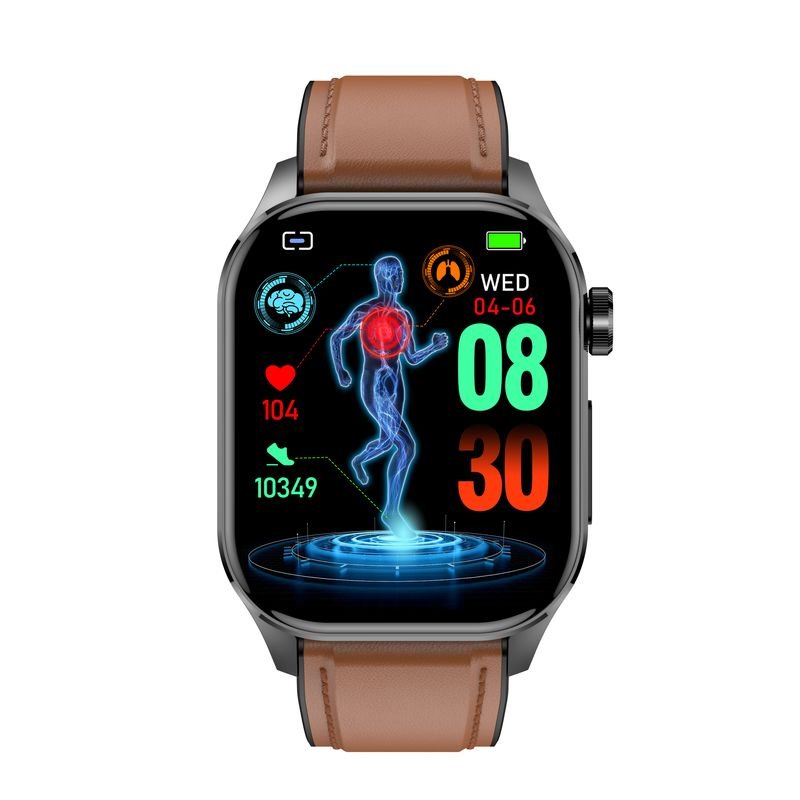
The ET580 smartwatch is a good model to test these questions on: a 2.04-inch AMOLED display (368×448) with Bluetooth 5.2 calling, a 380mAh battery with 3–5 days of use and 20+ days of standby, IP68 waterproofing, and magnetic charging in about 3–4 hours, running the H Band app. Every number there comes from the spec sheet; brightness in nits is not stated — get it in writing before you quote outdoor use. See our smartwatch sourcing guide.
Frequently Asked Questions
How long does it take to manufacture a smartwatch from scratch?
A full ODM project takes 45–90 days from the factories that publish timelines, including 30–45 days for tooling and trial shots before mass production starts. Tooling is the step buyers forget: steel has to be cut and trial-shot first, and that alone is 30–45 days. A custom OEM order on an existing platform takes 45–60 days for a first order and 30–45 days for a repeat. A white-label run takes 15–25 days, and stock models ship in 3–7 business days. Compare the clock that starts when you sign the sample.
Why do two factories quote 15 days and 45 days for the same watch?
Because they start their clocks at different points. The 15-day figure usually counts assembly only, after the sample is signed and the parts are in the warehouse. The 45-day figure usually includes sample approval, materials booking, firmware, packaging proofing, and certification. The honest comparison is stage by stage: sample time, materials, tooling, assembly, QC, and packing, each with its own date. Ask each factory for the timeline broken into stages, and compare stage by stage instead of comparing single numbers.
Can I speed up production by paying more?
Partly. A 7-day rush sample programme exists at some factories, and air freight can cut transit from weeks to days. Tooling time, material lead times, and testing cannot be rushed by paying more — steel takes the same time to cut, and a battery ageing test takes the same hours. What money does buy is priority: a rush sample slot, a booked line date, and air freight instead of ocean. Those move the queue, not the physics — and they cost less when booked early.