A product spec sheet for a Chinese supplier is a one-document reference that states the model, materials, dimensions, performance, packaging and pass/fail checks for one configuration. If it cannot answer what the factory must make, what is non-negotiable, and how conformity is checked, it is a product description, not a specification.
Why a photo and a link are not enough
Most first orders go wrong the same way: a buyer sends a supplier a photo, a link, and a message that says "like this, good quality, 500 pieces." The goods arrive in a different colour, a thinner strap, and a box the buyer’s customer will not accept. Both sides feel cheated — nothing was ever agreed.
A photo shows what a product looks like. It does not show the material grade, the battery capacity, or what counts as a defect. The written specification explains the details a photo cannot show — and it is the document the factory quotes against, the sample is judged against, and the inspection checks against. One document, three jobs.
Skipping it shows up in the quote: send the same photo to three suppliers without a spec sheet and you get three prices for three different products — one quotes a cheaper battery, one thinner packaging, one leaves the logo out. The cheapest quote wins.
The fields every spec sheet needs
A spec sheet does not need to be long. It needs to be complete for one configuration, and honest about what is still undecided. Use one row per requirement.
| Field | What to write | MT300 example |
|---|---|---|
| Identity | Product name, model, SKU, intended use | MT300 smartwatch, 1.43-inch AMOLED, for wholesale |
| Physical | Dimensions, weight, construction | 48 x 12 mm case, 63.5 g, rotary crown |
| Display | Size, type, resolution | 1.43-inch AMOLED, 466 x 466 |
| Performance | Chipset, connectivity, battery, rating | JL7013A, Bluetooth LE 5.0, 440 mAh, IP67 |
| Functions | What the product does, in plain names | 50 sport modes, H Band app, 5+2 watch faces |
| Materials | Case, strap, glass, finish | State the grade; if undecided, write "to be confirmed" |
| Appearance | Colour, logo position, artwork | Logo placement and dial options, confirmed before production |
| Packaging | Retail box, protection, carton, labels | Individual box, carton count, marking requirements |
| Checks | What to test before accepting the goods | Display, buttons, charging, Bluetooth pairing, water rating |
| Control | Version, date, owner, status | Spec v1.0, dated, marked "issued for quotation" |
Three rules run through the whole sheet. First, use measurable values, not adjectives: "high quality" or "good packaging" leave too much room for interpretation. A 440 mAh battery can be tested; "long battery life" cannot. Second, only include tolerances or test methods when they are actually defined for the product — never invent a limit to fill a sheet. Third, mark anything undecided as a question — "to be confirmed" is a valid entry.
A worked example: the MT300
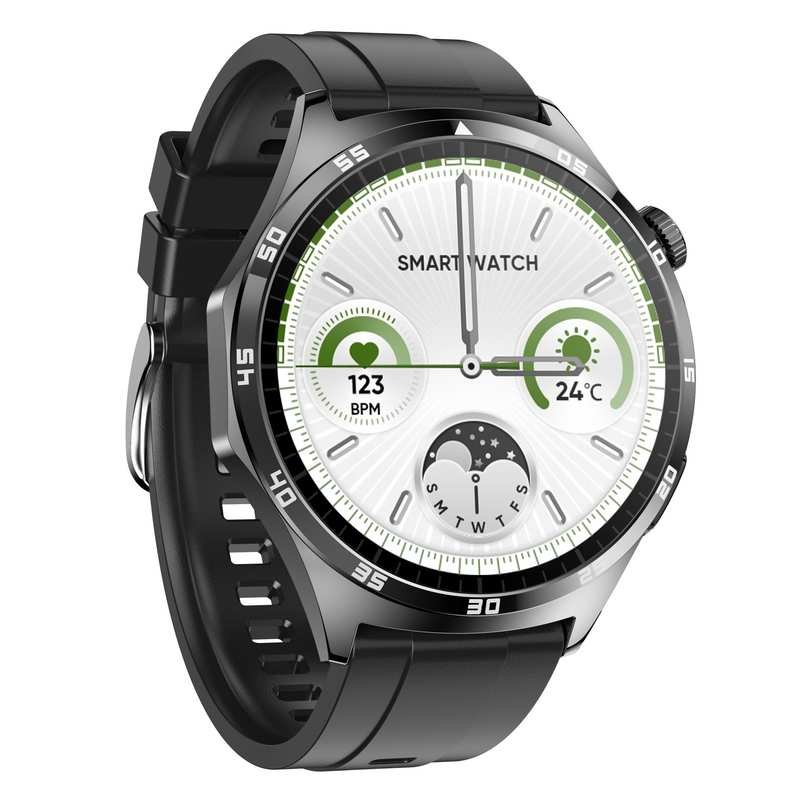
The MT300 smartwatch shows how a short sheet carries a real product: a 1.43-inch AMOLED panel at 466 x 466, JL7013A chipset, Bluetooth LE 5.0, and a 440 mAh battery. The case measures 48 x 12 mm, weighs 63.5 g, carries a rotary crown, and is rated IP67. It runs the H Band app, offers 50 sport modes and 5+2 watch faces.
The sheet is also honest about its gaps: it does not state charging time or battery life in days, so those two lines read "to be confirmed in writing before quoting" instead of carrying a guessed number. Strap colours and dial options in the quoted price are listed as a question, not assumed.
See the full listing for the MT300 smartwatch on our product site, and our smartwatch sourcing guide for the wider buying process.
One sheet per configuration, one version for everyone
A sheet covers one configuration: one model, one colour set, one bundle. A black MT300 with a silicone strap and a silver one with a metal strap are two configurations — two sheets, or two clearly labelled sections. Mixing them on one page is how the wrong strap ships on the right watch.
Give the sheet a number and a date, and mark its status: draft, issued for quotation, or approved for production. When the sample review changes a line, issue a new version and retire the old one. Send the same version to every supplier and ask each one to point out differences, substitutions and items excluded from the quotation.
The sheet then follows the product through its life: initial specification, sample, sample review, revision, final approval, mass production, inspection. At each step the same document is the reference — the sample is judged against the sheet, the production run against the approved sample, and the inspection against the sheet again. Our guide to testing samples before a bulk order shows the sample step in practice. Keep it short — two pages both sides use beats ten pages neither side opens.
Featured model: the MT300
The MT300 smartwatch is the example behind this article: a 1.43-inch AMOLED display at 466 x 466, JL7013A chipset, Bluetooth LE 5.0, 440 mAh battery, IP67 rating, 48 x 12 mm case at 63.5 g, with a rotary crown, 50 sport modes and 5+2 watch faces. The two gaps — charging time and battery life in days — are marked for written confirmation before quoting. See our products page for the full HnThai range.
Frequently Asked Questions
What should a product spec sheet include?
A spec sheet should define what the manufacturer is expected to make and how the finished product will be judged. Most sheets cover identification, materials, dimensions, appearance, performance, branding, packaging, quality and testing criteria, and revision control. Every sheet needs the same spine: the exact model and configuration, measurable values instead of adjectives, the packaging and labelling, the checks that decide pass or fail, and a version number with a date. Separate confirmed facts from open decisions.
Should I send the same spec sheet to every supplier?
Yes. Send one version of the specification to each supplier and ask them to point out differences, substitutions and items excluded from the quotation. That is the only way the quotes compare like with like: the same model, the same materials, the same packaging, the same checks. If a supplier proposes a substitution, ask for it in writing against the sheet, so the change is a decision, not a surprise at delivery. A supplier who cannot meet a requirement should say so before you pay.
When should I write the spec sheet — before or after the sample?
Write the first version before you ask for a quotation. The first draft can be short: model, key dimensions, materials you know, and the checks you care about. The sample review then tests it — what the sample gets wrong becomes a revision, and the revised sheet becomes the production reference. A spec sheet written only after the sample is approved is a record of what arrived, not a control on what will be made.