
A quoted 15-day lead time for consumer electronics from China usually covers production only, after the deposit is paid and the sample is approved. Stock items ship within 7 days, logo customisation runs 15–30 days, and a private mould takes 15–45 days. Production is only 30–40% of the total time from first message to goods ready to sell.
What a quoted lead time covers — and what it leaves out
When a factory quotes a lead time, it usually means the days of production after the order is confirmed and the deposit is received. Sampling and approval, material and component sourcing, tooling, quality inspection and rework, packing and labelling, inland transport to the port, export clearance, and the wait for the ship or flight all sit outside that number. Then comes international transit and import clearance. The date that matters is not when production ends but when the goods are available to sell.
That is why "thirty days" is one of the most common answers a Chinese supplier gives — and one of the most misunderstood. The figure rarely includes everything between your first message and the moment the goods leave the factory.
Typical lead times by project type
| Project type | Typical lead time |
|---|---|
| Public mould, stock available | Within 7 days |
| Public mould + logo customisation | 15–30 days |
| Public mould + custom packaging | 15–30 days |
| Private mould (OEM) | 15–45 days |
| New product development | 1–3 months |
The more customisation, the longer the lead time. A stock smartwatch can leave the warehouse in a week; the same watch with your logo, your box, and your manual is a different project, with artwork approval, printing plates, and packaging production in front of it.
The five phases — and where time gets lost
| Phase | Typical duration |
|---|---|
| Supplier qualification | 2–4 weeks |
| Sampling and approval | 1–4 weeks |
| Production | 15–60 days |
| Inspection | 3–5 days |
| Logistics (sea freight) | 18–25 days |
Most buyers focus entirely on production, but the real time killers are the sampling loops and the rework. In one sourcing group's experience, production accounts for only 30–40% of total elapsed time; the other 60% happens before and after the factory floor. For consumer electronics the full run is typically 45–75 days from first message to goods in hand — with production itself only 20–30 days of that.
Six reasons 15 days becomes 30
- Materials and components. A factory with materials in stock can start almost at once. If it has to buy a specific chip, the order waits for its slowest supplier. A chip shortage can extend lead times by 3–4 weeks. Ask which materials are in stock — before the deposit, not after.
- Customisation. Your colours, logo, packaging, and manuals add steps: artwork approval, printing plates, packaging production. Each depends on your quick answers as much as on the factory.
- New tooling. A new mould is made, tested, and adjusted before mass production can start. Ask for the tooling schedule separately from the production schedule.
- The factory's queue. Your order joins a queue with other customers' orders. Small orders get deprioritised: orders under 5,000 units may wait 1–2 extra weeks for a production slot. Before Christmas and Chinese New Year, many factories are full — peak season adds 2–4 weeks.
- Approvals and payments. Production usually starts only when the deposit has arrived and the sample has been approved in writing. A week lost waiting for a payment or a decision is a week added to the delivery date. The biggest cause of delay is often late decision-making, not slow manufacturing.
- Holidays. China's public holidays stop production. For 2027 the Spring Festival runs 5–13 February, Labour Day 1–5 May, and National Day 1–7 October. Around Chinese New Year the slowdown lasts much longer than the official holiday, because workers travel home and return gradually. Factory closures and maintenance can add 1–3 week gaps that no lead-time calculator shows.
Plan backwards from the sales date
Start from the day you need the goods on the shelf and count backwards: transit and customs, inspection, production, sampling, qualification. Add a buffer for the one thing you cannot control — a component delay or a failed inspection — and put the delivery date in the order, not in a chat message. If the factory will not commit to a date in writing, the date is not real.
If the launch date is fixed, order early and ship the first batch by air. Air freight costs more, but it is cheaper than a missed season. Confirm certification before you commit: new testing adds 2–6 weeks if the product does not already hold it.
A real example: the V69
Take a real product: the V69 smartwatch carries a 1.85-inch HD display (360×360), a 710mAh battery, IP67 water resistance, Bluetooth 5.0 BLE with about 10m range, magnetic charging, the Da Fit app, and over-the-air updates, on an 8763EWE chip, in a 52.6mm case at 77.4g.
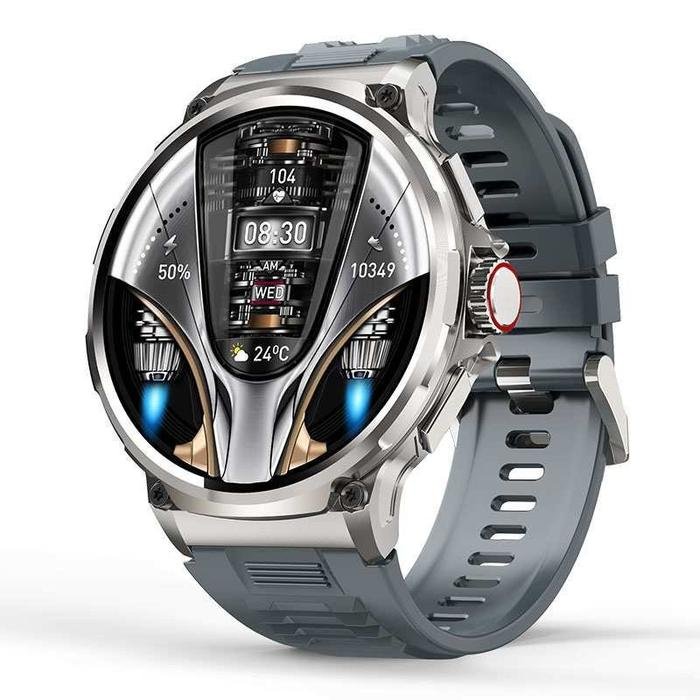
On a V69 order, the lead-time questions write themselves: is the stock version available within 7 days, or does your logo push it to 15–30? Is the chip in stock, or does it need ordering? Is the factory's next free production slot this month or next? Get the answers in writing before the deposit — the quoted number is only the production days, and the rest of the calendar is yours to manage.
See our Smartwatch Sourcing Guide, quotation comparison guide, packaging guide, pre-shipment inspection guide, and shipping guide. Browse our products page and smartwatches page.
Frequently Asked Questions
How long does it take to get electronics made in China?
A stock product ships within 7 days. The same product with your logo takes 15–30 days, a private mould takes 15–45 days, and a new product takes 1–3 months. The full run is typically 45–75 days, because qualification takes 2–4 weeks, sampling 1–4 weeks, production 15–60 days, and sea freight 18–25 days. Production is only 30–40% of that total — the rest is sampling, inspection, and logistics.
Why did my 15-day lead time become 30 days?
Because the quoted 15 days usually covers production only, after the deposit is paid and the sample is approved. Sampling, component sourcing, tooling, inspection, packing, and inland transport all sit outside it. The usual causes are a chip that had to be ordered, a production slot lost to a bigger order, a sample revision round, or a holiday shutdown. Ask what the quoted figure covers, and get the start trigger — deposit received plus written sample approval — written into the order.
When should I order to avoid Chinese New Year delays?
Order well before the holiday and confirm the factory's shutdown and reopening dates in writing. For 2027 the Spring Festival runs 5–13 February, but the slowdown lasts longer than the official holiday because workers travel home and return gradually. The best ordering windows are Q1 or late Q4, when factory capacity is underused; avoid Q3, when peak season adds 2–4 weeks to scheduling. If your goods must sell in spring, place the order before the holiday, not after it.