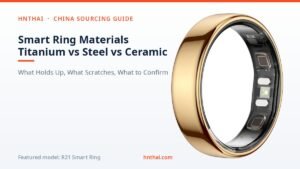
Titanium is the lightest and priciest, stainless steel the toughest value choice, and ceramic the smoothest on the finger. But the name alone tells you little: the R21’s stainless steel case weighs 2.7 g in size 10, while the R20’s ceramic body runs 3.6 to 4.5 g. Ask for the grade, the coating, and the weight in writing before you order.
Titanium vs stainless steel vs ceramic at a glance
Titanium wins on weight, steel on toughness for the money, ceramic on scratch resistance. None is best at everything — a thin steel ring can weigh less than a thick ceramic one.
| Material | Weight and feel | Scratch and chip risk | Best for | Confirm in writing |
|---|---|---|---|---|
| Titanium | Lightest; warm to the touch | Scratches dull; hard to refinish | Premium lines | Grade, solid vs coated, weight |
| Stainless steel | Cool, solid feel | Scratches, but can be polished out | Everyday lines, best value | Grade (304 vs 316L) |
| Ceramic | Smooth, glossy | Scratch-proof; chips on a hard drop | Gift and fashion lines | Ceramic type, drop-test result, crack warranty |
One honest gap: no titanium ring in our line has a verified spec sheet yet, so the titanium row is general guidance, not a claim about a model we sell. If a supplier quotes you one, ask for the grade and the weight per size in writing — if they cannot name the grade, price it as coated steel.
Stainless steel: the default for a reason
Most rings in our line are stainless steel: tough and far cheaper than titanium. The R21 shows what steel does well — 2.7 g in size 10, 6.08 mm wide, sizes 6 to 13 in four colours, rated 5ATM. Its 16 mAh cell runs 5 to 7 days of use, recharged in about 1.5 hours by magnetic charging.
Steel’s trade-off is weight: the R21’s 2.7 g is size 10, and a size 13 costs more metal than a size 6. Ask for the weight at the smallest and largest sizes you plan to order, and check fit with a size kit — see our smart ring sizing guide. A light scratch can be polished out — something neither titanium nor ceramic offers.
Ceramic: smooth, light-feeling, and brittle at the edge
Ceramic feels different on the finger: smooth, glossy, warm rather than cold metal. The R20 is our verified ceramic example — black ceramic, 3.6 to 4.5 g across sizes 8 to 14, rated IP68, with a 15 mAh cell running 3 to 5 days of use and 7 to 10 days of standby. Inside is an AC6323 chip with a Goodix GH3018 heart-rate sensor and the Smart Health app.
The 3.6 to 4.5 g spread is wide — ceramic wall thickness varies by size. The R20 weighs more than the steel R21, yet feels lighter — the smooth surface spreads the contact. Do not sell ceramic on weight; sell it on feel and looks. The trade-off is brittleness: ceramic shrugs off scratches that mark steel, but a hard drop onto tile can chip or crack it, and a cracked ring cannot be polished back. Ask for the drop-test result and the crack warranty, and confirm the ring cannot be resized — a wrong size is a return. One more check: the R20 file name mentions NFC, but the sheet lists NFC as not supported. Read the sheet, not the file name — battery numbers included; see our smart ring battery life guide.
Titanium: what to check when there is no spec sheet yet
Titanium is the material buyers ask about most and verify least: lightest at the same volume, corrosion-resistant, premium-priced — so it attracts vague claims. Three questions separate real smart ring materials from marketing claims. First, the grade: solid titanium is usually Grade 5 (Ti-6Al-4V) or commercially pure Grade 2, named on the spec sheet. Second, solid or coated: some “titanium” rings are steel with a titanium-coloured coating that scratches through. Third, the weight per size — a genuine titanium ring weighs noticeably less than the same design in steel.
Until a titanium model in our line has a verified spec sheet, confirm all three in writing before you order, and get the per-unit price at your quantity. If the supplier cannot name the grade, treat the ring as coated steel when you price it.
Featured model: the R21
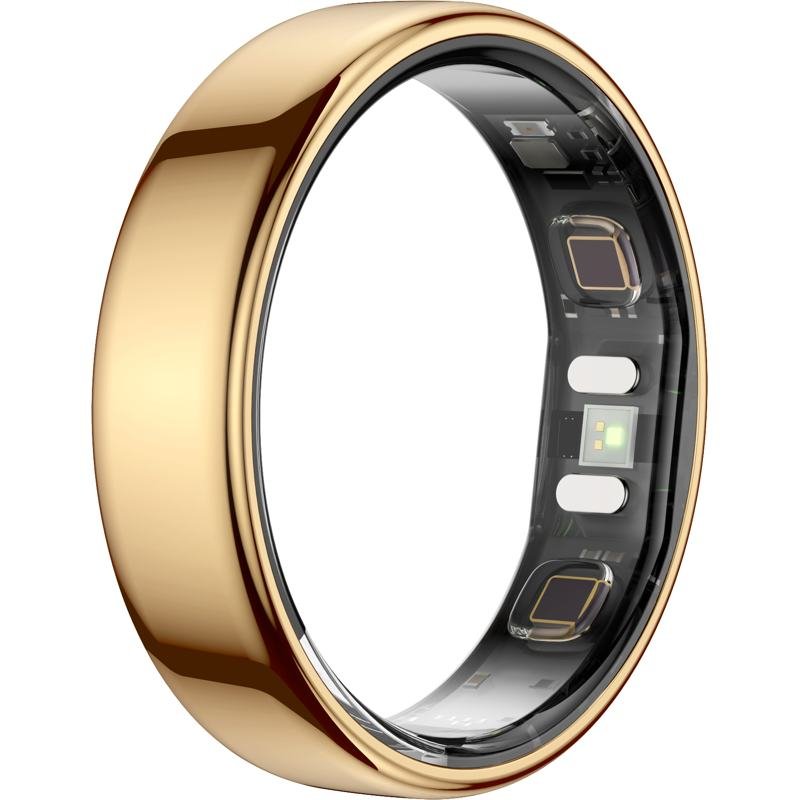
The R21 is the stainless steel case for this article: 2.7 g in size 10, 6.08 mm wide and 2.3 mm thick, covering sizes 6 to 13 in Gunmetal, Champagne Gold, Silver, and Rose Gold, rated 5ATM. It runs on a Nordic nRF54L15 chip with Bluetooth 5.4 BLE through the QRing app, with an HX3697 heart-rate sensor. The 16 mAh cell — 13 mAh in sizes 6 and 7 — gives 5 to 7 days of use and 15 days of standby, recharged in about 1.5 hours by magnetic charging. See the full listing on our R21 smart ring page.
Frequently asked questions
Is titanium worth the extra cost over stainless steel?
For a premium line, yes — if your customer notices weight and feel. Titanium is the lightest of the three and resists corrosion, which matters on a ring worn daily. For an everyday line, stainless steel does the same job for much less: the R21’s steel case weighs 2.7 g in size 10 and is rated 5ATM. No titanium ring in our line has a verified spec sheet yet, so get the grade and the weight per size in writing first — if the supplier cannot name the grade, price it as coated steel.
Does ceramic scratch less than stainless steel?
Yes — ceramic resists everyday scratches far better than steel, so a ceramic ring still looks new after months of wear. The trade-off is brittleness: a hard drop onto tile can chip or crack ceramic, and unlike steel it cannot be polished back. The R20’s ceramic body weighs 3.6 to 4.5 g across sizes 8 to 14 and is rated IP68, so warn about drops, not water. Ask for the drop-test result and the crack warranty in writing, and order a size kit, because a ceramic ring cannot be resized.
Which material is best for sensitive skin?
Stainless steel in grade 316L and titanium are the two materials buyers ask for first when a customer reports sensitivity, and ceramic is a smooth, non-metal option that avoids the question entirely. But the exact alloy matters more than the material name: nickel content varies by steel grade, and a coating can wear through. Before you promise anything, get the grade in writing and test a sample on skin for a week — it costs little and settles the question for your size run. If a supplier will not name the grade, do not make a skin claim.
Talk to HnThai about your smart ring order
HnThai is a sourcing partner based in Huaqiangbei, Shenzhen. We check the material, the grade, and the weight per size before we quote — and we say plainly when a claim needs a spec sheet to back it. See the full range on our smart ring page or contact us — we reply within 24 hours.