A smart ring measures heart rate, blood oxygen, sleep, and movement with two or three sensors inside the band. The R22, for example, pairs a dual-photodiode heart-rate sensor with an accelerometer and a temperature sensor in a 2.7 g ring. The readings work for trends, not diagnosis — trust depends on the sensor, the fit, and how often it samples.
What sits inside a smart ring
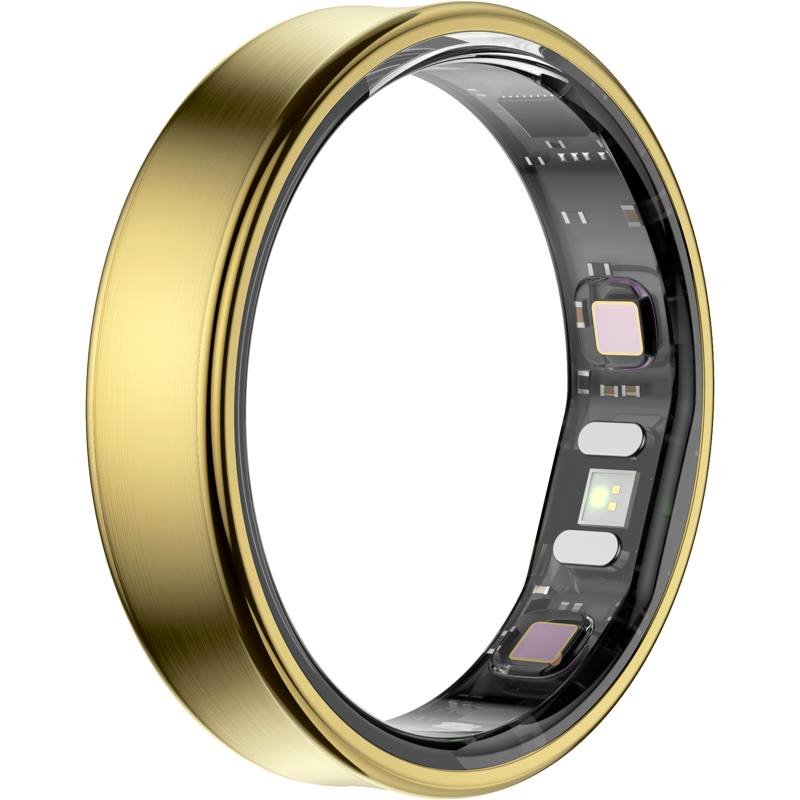
Most rings carry three sensing parts. First, an optical PPG sensor: LEDs shine light into the finger, and photodiodes read the bounce-back as blood volume changes with each heartbeat. That one signal feeds heart rate, heart-rate variability, and blood oxygen. The R22 uses a HX3697 heart-rate sensor with dual photodiodes.
Second, an accelerometer: it tracks movement, counts steps, and tells sleep from waking by how still the hand is. The R22 uses an ST LIS2DOC accelerometer, which also drives its gesture control and remote camera control. Third, a temperature sensor: the R22 lists body temperature measurement for sleep and recovery scoring.
What a ring lacks matters too. The R22 has no gyroscope, no screen, and no Bluetooth calling — it senses, and the phone app displays. Some rings add a gyroscope or NFC. Ask for the sensor list by model name: two rings that look alike can sense very different things.
How far to trust each number
No smart ring matches a chest strap or a fingertip oximeter. A six-month test against a Polar H10 chest strap and a medical-grade fingertip oximeter found resting heart rate within 2 to 3 BPM, active heart rate within 5 to 10 BPM, and blood oxygen within 2%.
| Metric | Real-world accuracy vs reference devices | Best use for your customers |
|---|---|---|
| Resting heart rate | Within 2–3 BPM of a chest strap | Daily trends, recovery tracking |
| Active heart rate | Within 5–10 BPM; some rings cap near 120 BPM in hard workouts | General activity, not training zones |
| Blood oxygen (SpO2) | Within 2% on averages over 10+ minutes | Overnight trends, not single readings |
| Heart-rate variability | Directional only | Week-to-week trend |
| Sleep stages | About 60–70% agreement with a sleep lab; 55–65% for budget rings | Sleep duration and patterns |
| Steps | Within 15% | Activity trends |
RingConn users on Reddit report heart-rate readings that stop rising near 120 BPM during hard exercise, and sleep scores of 80 or even 93 on nights when they barely slept — one user had a movie evening counted as sleep. Rings are strongest at rest and overnight, weakest during fast-changing exercise.
What breaks a reading
Four things decide whether a sensor reads well or badly. Fit comes first: a loose ring lets outside light leak into the optical sensor, and a ring that spins loses contact with every move. Read our smart ring sizing guide and order a size kit with your samples.
Motion comes second — optical sensors struggle when heart rate changes fast, which is why workout readings drift while resting readings stay tight. Cold hands come third: poor circulation weakens the optical signal, and blood-oxygen readings are the first to go wrong. Sampling rate comes fourth: a ring that checks blood oxygen every five minutes can miss a short dip, and one that samples heart rate every minute costs more battery than one that samples every five.
What to ask your supplier before you order
- Sensor model names, in writing. HX3697, ST LIS2DOC — named parts can be checked; "high-precision sensor" cannot.
- What is measured on the ring, and what is calculated in the app? Heart rate and motion are sensed; stress scores and sleep stages are app-side math built on top of them.
- Sampling intervals. How often does it read heart rate and blood oxygen — every minute, every five minutes, or only on demand?
- What "AI analysis" means for this model. On the R22 it is app-side scoring in the QRing app, not an extra sensor.
- Test it against a reference for a week. Wear the sample next to a chest strap and compare resting heart rate and overnight blood-oxygen averages over days, not single readings.
- Confirm what the ring does not do. No ECG without a dedicated ECG chip, no blood pressure, no glucose. If a listing claims those, ask for the chip name — and walk away if there is none.
Featured model: the R22
The R22 is a sensor-first ring: a HX3697 dual-photodiode heart-rate sensor, an ST LIS2DOC accelerometer, and a body temperature sensor, run by a Nordic nRF54L15 chip with Bluetooth 5.4 BLE through the QRing app. It weighs 2.7 g in size 10, measures 6.08 mm wide and 2.3 mm thick, covers sizes 6 to 13 in Gunmetal, Champagne Gold, Silver, and Rose Gold, in a stainless steel case. The 16 mAh cell — 13 mAh in sizes 6 and 7 — runs 5 to 7 days of use and 15 days of standby, recharged in about 1.5 hours, and the ring is rated 5ATM. See the full listing on our R22 smart ring page.
Frequently asked questions
Can a smart ring replace a chest strap for workout heart rate?
No — not for training zones. A smart ring stays within 5 to 10 BPM of a chest strap during exercise, and RingConn users report readings that stop rising near 120 BPM in hard workouts. Resting heart rate, by contrast, stayed within 2 to 3 BPM of the strap in the same test. Rings are best at rest and overnight. Sell the ring for resting trends, recovery tracking, and sleep; training-focused customers should keep a chest strap for intervals.
Why does my ring show a different blood oxygen number than a fingertip oximeter?
The two devices sample differently. A ring that checks blood oxygen every five minutes can miss a short dip, and cold hands or a loose fit weaken the optical signal. A fingertip oximeter takes one reading on demand; a ring reads all night, so single numbers will disagree even when both work well. In testing, single ring readings varied by 2 to 3% against a medical-grade oximeter, while averages over ten minutes or more stayed within 1%. Compare overnight averages, not single readings, and check the fit first.
Do all smart rings measure the same things?
No. The sensor list is the product: the R22 has a heart-rate sensor, an accelerometer, and a temperature sensor, but no gyroscope and no ECG chip. Other rings add a gyroscope or leave out temperature. A ring with a temperature sensor can feed sleep scoring; one without it cannot, whatever the listing implies. The spec sheet is the source of truth. "AI health analysis" is app software, not a sensor, so ask what data feeds it. Get the sensor model names in writing before you order.
Talk to HnThai about your smart ring order
HnThai is a sourcing partner based in Huaqiangbei, Shenzhen. We read the sensor list before we quote, and we tell you plainly when a claim needs a sample test to confirm. See the full range on our smart ring page or contact us — we reply within 24 hours.